From the November 2026 issue of Apollo.
Now that the dust has settled on the fair extravaganza of Frieze, Frieze Masters and Art Basel Paris, those who are interested in the art market can turn their attention to the auctions at Sotheby’s, Christie’s and Phillips in New York. These auctions are often some of the largest to take place annually and in previous years they have generated over $1bn in sales. This year, art-world insiders will be looking on anxiously to confirm that the green shoots noticeable for most of this year really are becoming something slightly more substantial.
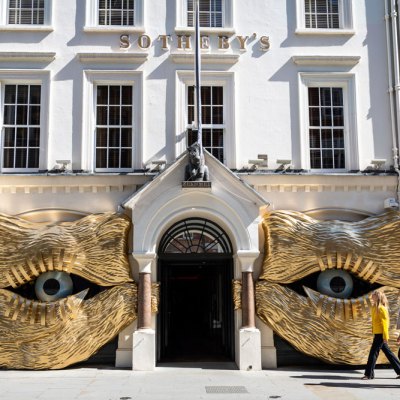
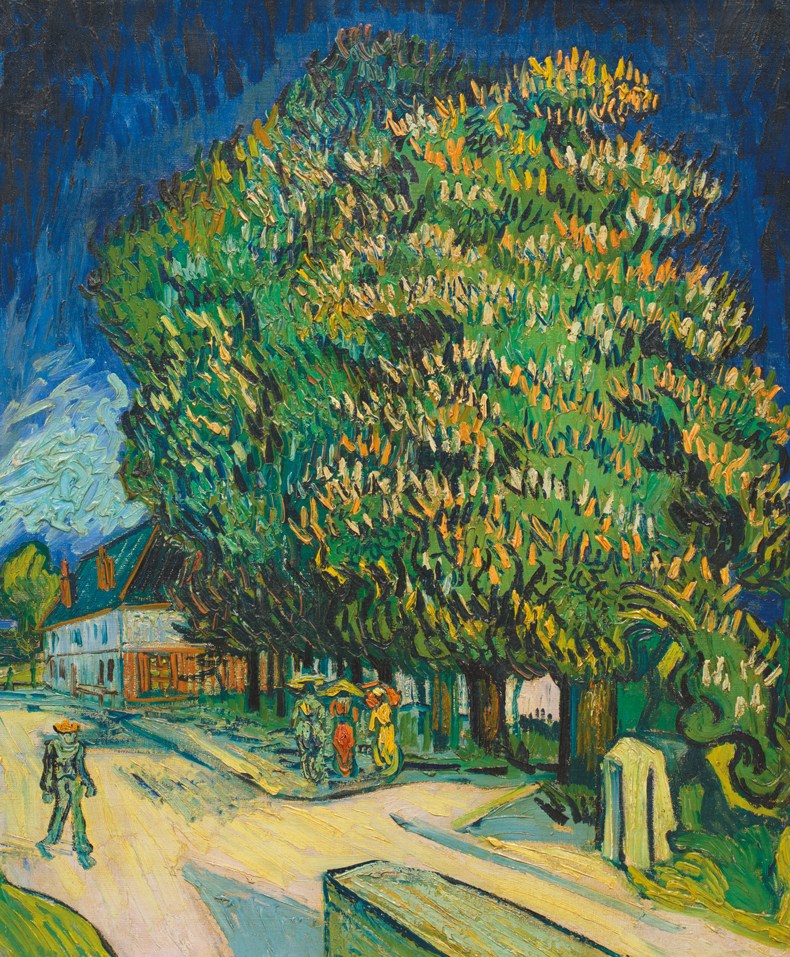
One of the big announcements has come from Christie’s, which seems to have a nice line in announcing single-owner collections before most people have remembered that the sales are taking place. Works from the Peter Simon and Monsoon collection, for example, were given a lengthy preview before the noise of Frieze week could obscure it. For the November sales, Christie’s has announced that they are putting up $100m of art from the collection of Jeff Koons. This is alongside Sotheby’s announcing 12 works of art from the collection of Nelly Arrieta de Blaquier, who died in 2020. The Blaquier-Arrieta collection is one of near-mythical status, reputedly one of the finest collections of Impressionist and Post-Impressionist art. The works that have come up for auction have not been seen in public for 50 years. They are expected to be worth $450m. Châtaigniers en fleurs (1890) is officially listed as estimate on request, but at an unofficial $180m, it is expected to be worth more than the entire group of works sold by Koons.
As ever with auctions there are different ways of reading this. It is an exciting opportunity to see works of art that have been in private hands for a long time. In the case of Koons, it is also an opportunity to see what interests the world’s highest-value living artist (his work Rabbit, from 1986, went for $91.1m at Christie’s in 2019). Koons has long made known his interest in Old Masters – available for sale in January 2027 – as well as pointing out what good value they are for the collector.
It is possible to read these developments as an encouraging sign of a market revival – a much-needed boost not only for the auction houses but also for the dealers and advisers who depend on growth in this sector. Conversely, it is possible to find your nearest soapbox and complain that these prices are outrageous and have nothing to do with art. It is easy to be seduced by this latter view but the splutterers should perhaps remember that much of the greatest art was made precisely to advertise its expense and therefore the power of the commissioner. The idea of art for all is only a comparatively recent addition to the philosophy of art history.
The enormous prices exist as an attempt to quantify the ineffable power of art. The most useful tool we have for showing value is still money and so unquantifiable value ends up being expressed in almost uncountable numbers. But is this to say that art that is sold for less money is necessarily less valuable?
It is possible to find works of art at Frieze for less than £10,000. It is possible to find Old Master drawings at TEFAF for the same amount. At the Affordable Art Fair, which runs in Battersea Park at the same time as Frieze, no work of art is sold for more than £10,000. Are these lesser works of art? In some cases, the answer is unquestionably yes. But it is probably truer to say that the price differences are a reflection of the fact that money is an inadequate way of measuring artistic value. It is so much easier to lean on large numbers when there’s a body of art-historical study to prop them up. What you’re buying with that enormous number might have nothing to do with the work of art itself; instead you’re buying para-artistic approval and maybe that’s what is necessary to keep the market strong.
From the November 2026 issue of Apollo.