From the December 2026 issue of Apollo.
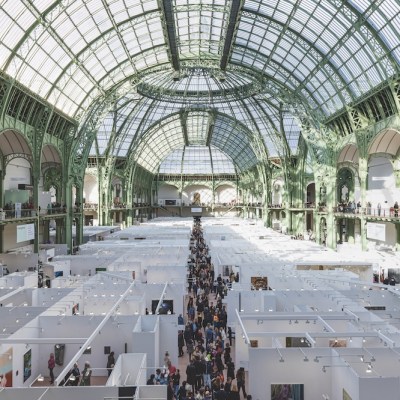
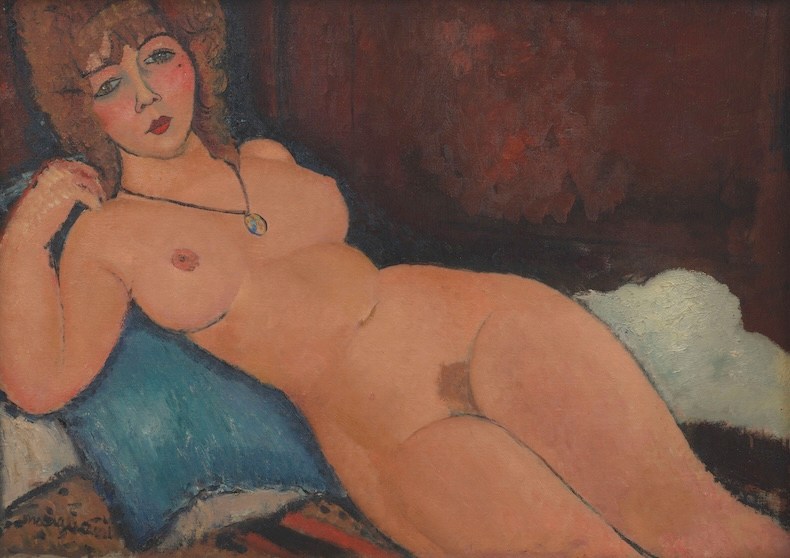
France in October may have seen looting and arson in the wake of protests at school conditions and the cost of living – but that didn’t deter the opening of Art Basel Paris. This ‘luxury bubble’ of an art fair, as hostile press dubbed it, opened at the Grand Palais on 22 October, with an array of million-dollar works of art, including a Modigliani reportedly on offer for more than $125m.
The fair eventually bowed to the inevitable and closed early, but sales while they lasted were fierce and brisk. Inside the light-filled interior of the Beaux-Arts building, a select group of collectors pounced on works by Richter, Baselitz, George Condo, Julie Mehretu, Alexander Calder, Mark Bradford and Lucio Fontana, all in the seven figures. ‘It’s been like drinking from a fire hose,’ declared Emmanuel Di Donna of Pace Di Donna Schrader Galleries, which showed the Modigliani, after the opening day.
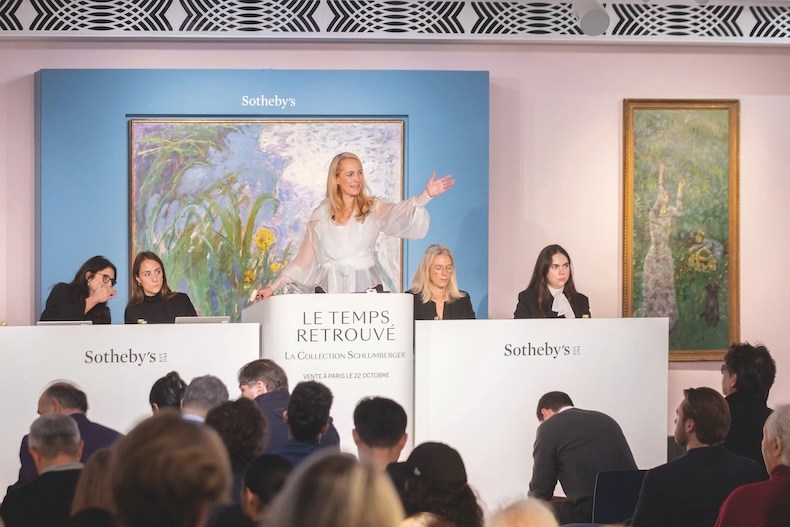
Art Basel Paris wasn’t alone in terms of high-value sales. In the same week, Monet’s Iris (1924–25) sold at Sotheby’s Paris for an eye-popping €50m, including fees, after an epic 45-minute battle between six bidders. In the end it was hammered down to a private Asian collector. The following week in New York, a 67-million-year-old Nanotyrannus skeleton, ‘Jodi’, sold at Sotheby’s for $47.3m including fees, with six buyers chasing it well over its $9m high estimate.
But while the top end of the art market was doing well, things were far from rosy in the middle. Several significant dealers have shut up shop in 2026, including Stephen Friedman and Tiwani Contemporary in London, and CLEARING and Venus over Manhattan in New York, while others drew in their horns by downsizing. In Seoul, Peres Projects, König and Various Small Fires closed their galleries. As the Art Basel UBS report for 2025 noted, the largest dealers (with turnover greater than $10m) saw a strong uplift, with just under half of those reporting increased sales. At the same time, 38 per cent of dealers overall were less profitable than in 2024.
Welcome to the K-shaped economy. The term was popularised during the pandemic by Peter Atwater, an economics professor at William & Mary college in Virginia, who used it to describe a growing wealth divide in society at large. The line of the ‘K’ that is angled up describes the ultra-rich, who are spending – even splurging – crazily on all manner of things. The line angled down represents lower and middle earners with far fewer resources, who have curtailed spending under pressure of increases in the cost of living. Wealth is polarising and, at the top end, there are extraordinary fortunes being made. According to the 2026 World Inequality Report, the wealthiest 0.001%, which numbers fewer than 60,000 multi-millionaires, ‘control today three times more wealth than half of humanity combined’. Their share has grown from almost 4 per cent in 1995 to more than 6 per cent today.
This widening gulf also drives the art market, which returned to growth last year at a modest 4 per cent. ‘The top end of the market was critical in the turnaround to growth,’ says Clare McAndrew, who compiles the Art Basel UBS report. According to her data, the market is driven by works worth over $1m: these account for more than 54 per cent of total global auction value, despite representing less than 1 per cent of total transaction lots.
All this is borne out by stellar auction results – for example the success of the collection of Joe Lewis at Sotheby’s, featuring works by heavy-hitters Picasso, Freud, Bacon, Matisse, Degas and many others. It made £296.3m and was the most valuable single-owner collection ever sold in the UK. The top lot was Modigliani’s sensuous Nu assis au collier (1917–18), which made £48.2 million, while another nude by Lucian Freud, of the fleshy Sue Tilley – Sleeping by the Lion Carpet (1995–96) – sold for £29.3m.
Such buying doesn’t stop at art: as we have seen, skeletons of T. rexes and other dinos have become must-haves for billionaires. The current record stands at $50.1m for ‘Gus’, a 67-million-year-old T. rex skeleton, paid in July this year. Even the humble skateboard (no longer humble) can now boast a massive price: the record at auction stands at a cool $1.15m, for Tony Hawk’s Birdhouse Falcon 2, while a Micky Mantle baseball card sold for $12.6m. Luxury goods are another growing sector – according to ArtTactic, luxury grew 18 per cent year-on-year in 2025 and now represent 39 per cent of total sales at Sotheby’s, Christie’s and Phillips.
Along with the increasing polarisation of wealth, there is another trend to consider. In view of the weaker market over the last five years, art is no longer always seen as an ‘investment’, but it is certainly seen as an alternative asset class, a safe place to park chunks of those (immense) fortunes. ‘There is huge interest outside “investment” in art as an asset more broadly – whether it’s transferring wealth through generations, diversifying risk or using it as loan collateral,’ McAndrew says. A Hong Kong dealer with mostly mainland Chinese clients told me last year: ‘Many of my collectors will buy a Picasso as a store of value, as a safe place to put their money alongside other investments.’
Things look very different on the other arm of the K, however. ‘The market is strong, but business is bad,’ was how the Milan-based dealer Massimo de Carlo (who also has spaces in London, Paris and Hong Kong) summarised the situation at the recent Talking Galleries symposium in Barcelona. ‘Six years ago,’ he explained, ‘let’s say our entire income was 100, made through 150 invoices. Now we make income of 110, but with 400 invoices. So we are selling more work than before, but at a lower price, and the operational costs are much higher.’ Budgets for shipping, travel, insurance and other essentials are going up, De Carlo said, while museums and galleries ‘are having to spend too much money meeting the expectations of artists, collectors
and museums’.
Today, the middle is the toughest place to be. Mid-level galleries do not have the financial heft of the major players such as Gagosian or White Cube, or the nimbleness of the smallest players, who may not even have a fixed space and instead operate with pop-ups. They might have several employees and more than one space, as well as having to exhibit at multiple art fairs and service numerous artists – all costs that a cooler market can no longer justify. A sobering finding of the Art Basel report was that sales of work priced between $50,000 and $250,000 were down 29 per cent in the period 2010 to 2025 – hitting the mid-level dealer the hardest.
Things do at least look brighter at the very bottom of the ‘K’, even if the sums of money involved are much smaller. McAndrew found the strongest increases in sales at the lowest price levels: between 2021 and 2025, auctions worth less than $50,000 increased in volume by 20 per cent while all other segments declined. She also found that growth was driven by the lowest price levels, under $5,000, where sales are up by around a third, both in volume and in value.
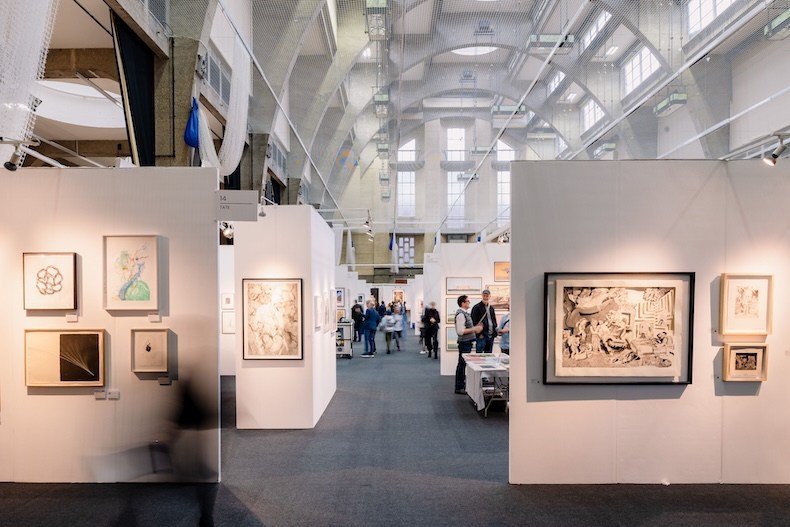
But is this due to existing buyers going for less pricey works, or are the cheaper works bringing in new buyers? One clue is the market for prints and multiples. I recently went to Imprint, a fair in London that has morphed from its original iteration as Woolwich Contemporary Print Fair, with 40 booths, into a Westminster-based event with 50 booths. Here prices start in the low hundreds of pounds and go up to about £50,000 (the latter for a large secondary-market print by David Hockney). The fact that the fair has relocated and grown in size seems to indicate increased interest in this sector. According to ArtTactic’s most recent report on the prints market, from 2025, ‘confidence is strengthening, and new buyers are entering the field.’ Those new buyers are key to this market, because prints and multiples are the gateway for younger buyers, who dealers hope will gradually move up the price chain.
These younger buyers – particularly Gen Z – are comfortable with editions, drops and limited-release cultures, since they are part of the world in which they have grown up. ‘What makes prints so appealing, especially for younger buyers, is that they take a lot of the intimidation out of collecting,’ says Sheena Carrington of MyArtBroker in the ArtTactic report. ‘You can buy something meaningful by an artist you love – even blue-chip names like Hockney or Lichtenstein – for under £10,000, which feels realistic and achievable. And at the same time, you learn more about how art is made. There’s something very open and educational about this part of the market. It’s a space that feels less about gatekeeping and more about discovery.’
Let’s also not forget the looming Great Wealth Transfer, already covered in these pages in March this year. Those younger buyers – millennials and Gen Z, now in their 20s, 30s and 40s – are in theory set to inherit vast sums from their elders over the next decades. While this transfer is probably not a magic bullet, and may not transform the market by bringing in cohorts of new buyers, it does mean that some younger collectors will potentially have a lot of disposable income. Whether they will spend it on art, at whatever price, is another matter.
So what is the future for the K-shaped economy, as far as the art market is concerned? The wealth divide seems set to continue and indeed amplify, as does discontent at falling living standards. While there is talk of a C-shaped correction, with the two opposite ends of the ‘K’ leaning towards each other as wages improve, this seems highly unlikely to me.
One question I do have is whether the market can continue to absorb the collections of blue-chip art which come under the hammer, as boomers and their parents pass on. Museums certainly can’t acquire all the works at those prices and there may be a time when there will be a thinning buyer base for $50m-plus works of art. Had the Modigliani at Art Basel Paris found a buyer before the fair was curtailed? ‘PDS does not release sales,’ is all a spokesperson for Pace Di Donna Schrader Galleries would say – interpret that as you wish. What is certain is that there are pockets out there that can afford it, just as there are enthusiastic buyers at a much lower level.
As for the mid-market, Massimo De Carlo told me: ‘Of course you need passion, but you also need to keep an eye on the numbers. We grew too fast, and now galleries need to face this.’
From the December 2026 issue of Apollo.