From the September 2026 issue of Apollo.
Cork Street in Mayfair has been the heart of London’s gallery scene since the 1930s, when a single show could be an event. In 1990 Leslie Waddington, who was famous for showing modern artists, put on an exhibition of an unknown painter two years out of art school. The street was packed with artists, gallerists, art students, collectors and critics, drinking wine out of plastic cups. They were there to see the poured paintings of 24-year-old Ian Davenport – and each other.
Cork Street has reinvented itself several times: galleries such as Alison Jacques, Sadie Coles and No 9 (owned by Frieze) have opened there since 2021. Eighty-eight years after Peggy Guggenheim opened Guggenheim Jeune, the subject of an upcoming show at the Royal Academy in November, this hub of high-end galleries appears to be thriving.
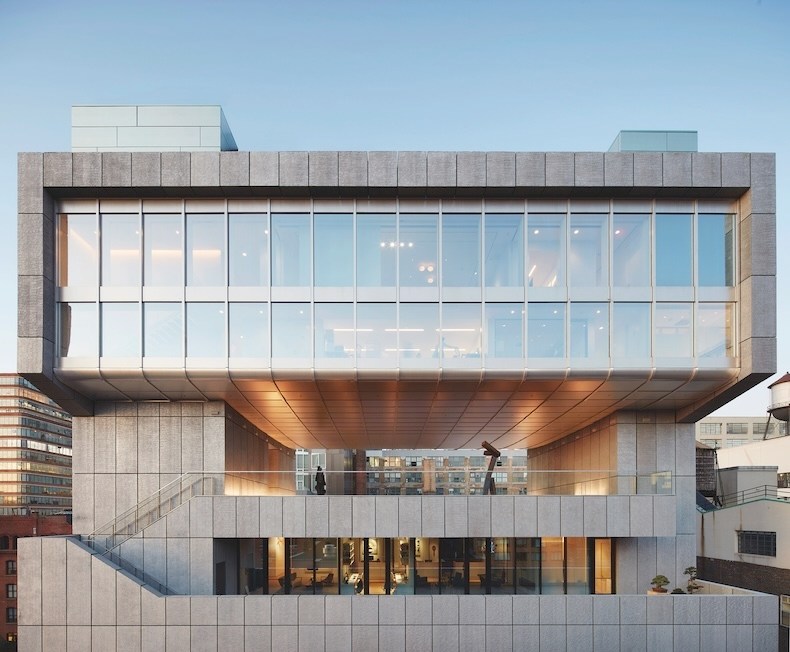
But the health of galleries worldwide has been called into question by Pace, one of the four biggest art galleries in the world, announcing that it would cut its roster of artists by 50 and its staff of around 250 by the same number. It subsequently revealed that in London it is looking to move from its gleaming, 800 sqm gallery on the corner of Hanover Square to what chief executive Marc Glimcher calls ‘a less corporate’ part of the city. The space has form: it was once home to Blain Southern, which went into administration in 2020.
A New York Times article this summer by Marc Spiegler, the former global director of Art Basel, further agitated many in the art market. Spiegler argued that galleries are in big trouble because they have over-extended and have parroted too easily the narrative of art as an investment. ‘The art world seemed to be booming,’ he wrote of the past two decades. ‘Young gallerists jumped into the global marathon that appeared to work for their predecessors. Until, suddenly, it didn’t work. For anybody.’
Glimcher minced his words even less than Spiegler. ‘The current gallery model isn’t only broken, it’s unfixable,’ he said in a statement. ‘Every gallery is currently making temporary fixes […] to prop up a system that no longer works.’
To many, these dramatic remarks might seem puzzling. There have been waves of openings in the past five years: at least 85 in major cities last year, estimates the research firm Arts Economics. In London these included Ames Yavuz and SLQS Gallery. Overseas galleries Dirimart and Perrotin opened a gallery and a project space respectively, while Maureen Paley opened her third London branch.
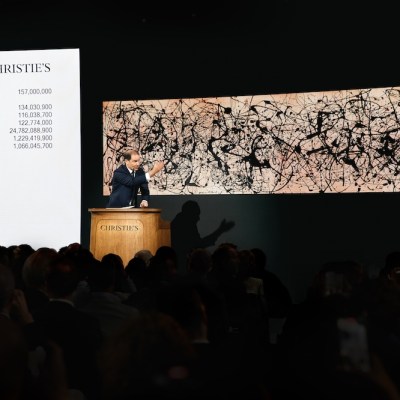
Then there are the auction results – the only publicly visible indicator of art sales – and Sotheby’s, Phillips and Christie’s are well up on 2025 so far. ‘[These have] had a remarkable rebound during the first half of 2026,’ Marion Maneker declared on news website Puck, with sales of $4.4bn up by 87 per cent on the first half of 2025. ‘Looking at […] previous [art] market cycles, we should expect a further rise in sales.’
Some blame Pace for its own troubles and say that it is not a bellwether for other big multi-national galleries such as Gagosian, David Zwirner and Hauser & Wirth, which all operate in different ways. Hauser & Wirth, for example, has developed a complementary hospitality business with pubs, restaurants and hotels. Pace made its reputation in the 1960s and ’70s with artists such as Louise Nevelson, Claes Oldenburg and Agnes Martin. But it expanded rapidly when Glimcher, the founders’ son, took over in 2011. Even now it represents 85 artists and estates, has eight galleries on three continents, including a huge eight-floor New York space with a rumoured rent of $9m a year, and invested heavily in Superblue, a 4,600 sqm immersive digital art experience in Miami.
Jerry Saltz was the most vocal of the management’s critics. ‘Pace feels as though it is built around a fantasy of endless growth,’ he wrote in New York magazine recently. ‘Every year has brought another expansion […] often followed by closings, restructurings, or strategic retreats.’
Yet there are signs of wider trouble: despite the number of new galleries, the art market has been rocked by some high-profile closures. In London, one of the most shocking was the bankruptcy earlier this year of Stephen Friedman Gallery, a stalwart of Cork Street and fairs such as Art Basel and Frieze. The city has also lost Tiwani Contemporary, Project Native Informant and TJ Boulting, among others.
Long before Spiegler said it, people with experience of the art world – especially those setting up new ventures – appear to have come to some similar conclusions. Matt Carey-Williams, who has had senior roles at Victoria Miro, White Cube, Sotheby’s and Phillips over the past 30 years, set up his own gallery on Porchester Place in London in 2024. It mounts focused selling exhibitions of single artists or themes in the gallery, and larger, international shows off-site.
‘I can’t imagine how difficult it is to be a gallery with, say, 20 spaces across 10 countries and 300 people. You end up spending all your time just fuelling the fire to keep the engine running,’ he says. Carey-Williams describes his project as ‘a little slice of madness, but something I love doing’.
‘There is no doubt that the market has changed,’ he says. ‘Or rather, there’s a labyrinth of markets, which means someone can still spend $108m on a Brâncuși [as happened in May at Christie’s New York] at the same time as galleries are closing or struggling to survive.’
The difficulties began, Carey-Williams says, after the pandemic. ‘We had a period of exponential growth from about 2010 to the early 2020s and there was an expectation that things would stay the same,’ he says. ‘And then everyone woke up. We are all facing a reality pill, but for some of the bigger galleries it’s a very big pill to swallow.’
The costs in cities such as London and New York have become a big part of the problem, according to one former gallerist. Rents in London, even for modest spaces, can be more than £100,000 a year (and for a space like Pace’s, vastly more). ‘Then there are business rates, rising wages, shipping has gone up crazily, artists want funding to do projects,’ the former gallerist says. Attending a big overseas fair can cost as much as £300,000 for a medium-sized gallery. Given galleries traditionally split sales 50/50 with their artists, that means they need to sell £600,000 just to break even. Too often, he says, the future of a gallery ends up hanging on making one or two big sales.
‘We don’t really do art fairs,’ says Emma Ward, co-founder of secondary market gallery Ward Moretti – a partnership and shared gallery space formed in 2022 with Old Master dealer Fabrizio Moretti. Ward, who specialises in Impressionist, modern and contemporary art, spent more than 20 years at Dickinson Gallery, one of the major Old Master, Impressionist and modern dealers.
The new business offers a bespoke service to a limited number of collectors, which Ward describes as ‘a bit like a membership club, favouring quality over quantity with a long-term outlook. It’s all about our relationships, working transparently and doing the research, so everyone walks away from transactions feeling informed and happy,’ she says. This contrasts with some of the attitudes she has seen in the primary art market: ‘there’s been an expansion concept that has been driven by ego, even greed.’
David Gryn has been involved in the art world for 40 years, as an artist, curator and champion of digital art. He launched Interval with his son Jacob in Clerkenwell, London, in 2025, showing contemporary artists with related modern or historic works of art (the first such exhibition paired Petra Cortright with medieval manuscripts and Dutch and Spanish Masters).
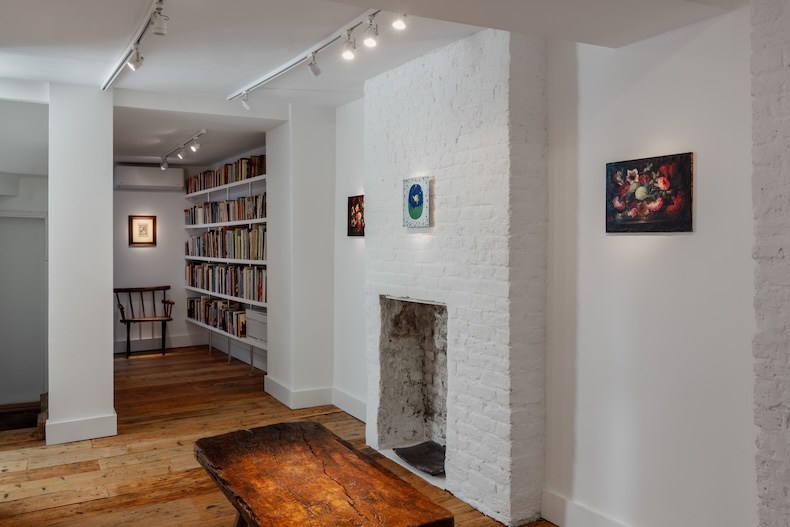
Gryn says that he had not intended to set up a gallery until he was hunting for a new home and came across a Georgian house in Clerkenwell with a shop, which reduces costs significantly. ‘There have always been booms and busts since I first got interested in art. As a gallery you have to be in it for the long term and you do it, a bit like being an artist, because you feel you have no option,’ he says.
Elizabeth Dee, the founder of the two Independent art fairs in New York, which cover contemporary and 20th century art, says galleries can run successfully in different ways. She ran her own gallery between 1997 and 2018, and before that was a director at Luhring Augustine and Daniel Weinberg Gallery. ‘The idea that contemporary art, right out of the studio, could support a whole gallery is a phenomenon of the past 20 years,’ she says.
‘At Luhring Augustine, we would always be working in the secondary market too, a Robert Gober or a Cézanne in the back room and Paul McCarthy or Gregory Crewdson, emerging artists at the time, showing at the front,’ Dee says. Galleries also collected work by their artists to save for a rainy day. ‘My mentor was Dan Weinberg, a great Californian dealer,’ she says. When he needed it, he would bring out an early Jeff Koons that he’d helped co-produce or a Brice Marden, and that could fund the gallery for six months or a year.
Dee disagrees with Spiegler that the gallery system is broken. ‘The period we are in now is more similar to periods before the art expansion of the last 20 years than it is different,’ she says. ‘I don’t mean to downplay the shift […] but calling it a completely new world is misleading.’
Paco Barragán is a curator and writer whose most recent book is The Failure of the White Cube: From the 19th Century Moralist Art Museum to the 21st Century Civic Art Museum. ‘The problem is not that the gallery model itself no longer works, it’s that galleries are interpreting today’s art world through 20th-century assumptions about collectors, artists, markets and global expansion,’ he says. It is ‘particularly revealing’, he adds, that galleries, which are free to enter, get so few visitors. That needs to change. ‘Historically, galleries such as Leo Castelli were not just places where artworks were sold: they were places of encounter, intellectual exchange and critical friction. The question is not how large a gallery can become but what role it should be playing.’
Sylvain Levy is a prominent French businessman and art collector who, with his wife and children, has built up the DSL Collection with an emphasis on Chinese and digital art. He says that galleries should play a vital part in developing the taste of collectors. ‘For me, collecting is about connoisseurship, taking your time, increasing your knowledge – having collecting as an art de vivre,’ he says, adding that there is a trend among younger collectors to find out about art ‘through social networks and events. And, since art has become the ultimate luxury good, some big galleries began acting more like luxury companies, where what matters the most is the branding of the gallery.’
Spiegler’s article has ruffled feathers, not least because Art Basel doubled in size, opening two huge new fairs in Hong Kong and Paris, during his 15-year tenure. But his conclusion, that galleries need to ‘prioritise markets closer to home’, ‘stop taking on more artists, stop doing more fairs and stop chasing the chimera of globalisation’, has clearly struck a chord.
Some may say that his view is nostalgic – that it is easy to romanticise New York’s SoHo scene in the 1980s or the start-up galleries, warehouses and pop-up shows that kick-started the art boom in London in the ’90s. Others argue that a close network of artists, galleries, critics and collectors is the bedrock on which the art market is sustained. New markets, such as Alserkal Avenue in Dubai, have begun on very similar principles.
Whatever the case, it is clear that many think it is time for a change. ‘I want that 1995 Cork Street vibe back, where everyone was talking [about art] to everyone else,’ Carey-Williams says. ‘Because in the end the art market is not the luxury goods market. Of course, they are both about expensive objects and something you might own. But art is different. A work of art should ask a lot more questions [of us] than a handbag.’ It seems that after two decades of globalisation, financialisation and luxurification, the art market may be forced to go back to basics.
From the September 2026 issue of Apollo.