I write this with my dachshund lazily eyeing me from her bed, looking remarkably similar to David Hockney’s beloved Stanley in Dog Painting 17 (1995), which became the first dog painting by the late artist ever to sell at auction on Wednesday night at Christie’s. It sold for £3.5m (all prices include fees), better than the estimate of £1.5m–£2.5m and £3.5m more than my own recalcitrant sausage is worth.
An over-priced dog seems a fitting place to start the coverage of Frieze week in London. The focal point of the evening auctions was the sale of nearly 200 works from the collection of Peter Simon, the founder of the bourgoise-boho fashion brand Monsoon, at Christie’s on Wednesday night and Thursday (another online sale finishes on Tuesday).
‘The collection was started meaningfully in 2000, around the same time as Tate Modern opened, and spanned the full course of the 20th century,’ Katharine Arnold, the vice chairman of 20th- and 21st-century Art at Christie’s, tells me. Simon – who is releasing space and funds to buy more work, particularly that of younger artists – built his collection with the guidance of the London dealer Ivor Braka (among others). Fittingly, Joseph Braka, Ivor’s son, is a Christie’s specialist and worked on the sale.
The Simon collection drew obvious parallels with that of another British businessman, Joe Lewis, which sold at Sotheby’s in June for almost £250 million. Since Brexit and the progressive curtailment of non-dom status, London as a market centre has been continually compared unfavourably with New York and Paris – though given the erratic behaviour and protectionist policies of a certain US president and France’s looming debt crisis, this is perhaps unfair. That Lewis and Simon chose to sell their collections here is an important show of faith in London, and the city is key to their context. ‘It’s rooted in British Modernism, it’s very London,’ the art advisor Emily Tsingou says of Simon’s collection. ‘Having a single-owner moment in London is an important thing, and all eyes are on this.’
On Wednesday night, the Simon collection became the highest value single-owner sale to be held at Christie’s in London, at £107m (in the middle of the £78.7m–£115.1m estimate). ‘On the night we saw especially strong prices in the evening sale for artists Hurvin Anderson, Liubuv Popova and Bridget Riley,’ Arnold says, adding that Thursday’s Monsoon day sale was 97 per cent sold by lot and by value, with particular demand for St Ives school works.
The entire collection was covered by a house guarantee, much of which was then sold off to third parties, often in bundles, says Tessa Lord, Christie’s Head of Post War and Contemporary Art in London says: ‘It’s interesting how people want to put certain works together.’
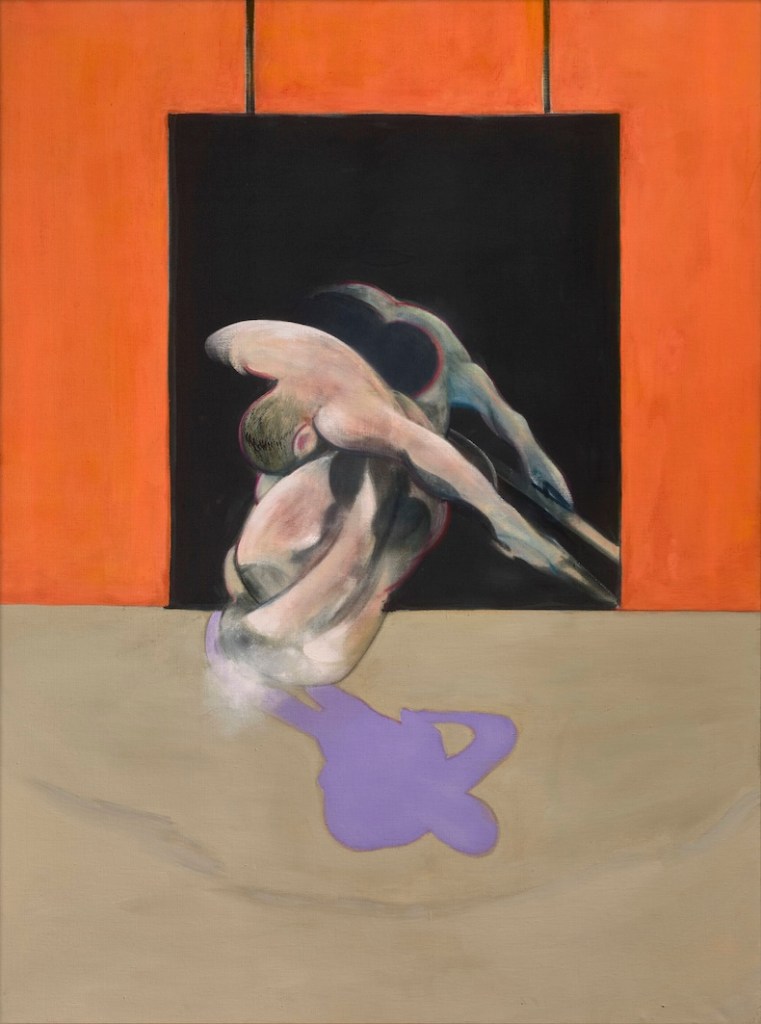
The top lot was Francis Bacon’s Figure in Movement (1978), which went for £17.2m, within its £14m–£18m estimate. Such not-too-bullish estimates were seen across the collection – speaking before the sale, Lord said: ‘It’s an extraordinary example of Bacon’s practice and at £14m that really is a very attractive estimate.’
Meanwhile, Hurvin Anderson’s lushly beautiful Last House (2013), bought from Thomas Dane Gallery the year it was painted, sold for a double-estimate £5.7m. Perhaps the biggest surprise was the auction record for the Russian-Soviet avant garde painter Liubov Popova, whose abstract Painterly Architectonic (1918) sold for £7.6m, to the art advisors Beaumont Nathan according to the industry newsletter Baer Faxt. The lot came with a large warning that, being of Russian origin, the work would be subject to 35 per cent import duty if imported to the United States – that’s an eye-watering $3.5m in duties alone. Cheaper to buy a London apartment to put it in.
In total, Wednesday evening’s auctions at Christie’s – the Simon collection plus a mixed-owner 20th- and 21st-century evening sale – brought in a hefty £218.6m, 103 per cent up on last year, with the mixed vendor sale making £111m. Top lot of the night came from the latter – an early oil by Wassily Kandinsky, Das bunte Leben (1907), which made £31.6m, comfortably above its £18m to £35m estimate. The painting, an experimental fusion of pointillism and fauvism techniques depicting a tableau of figures from Russian folklore, legends and religion, had been on long-term loan to the Städtische Galerie im Lenbachhaus in Munich for five decades before it was restituted in 2023 to the heirs of the Dutch collector Hedwig Lewenstein-Weyermann, whose family’s collection was confiscated by the Nazis and dispersed in 1940. The Kandinsky was followed in terms of value by Piet Mondrian’s early Composition III (1920), sold for a mid-estimate £25.2m.
It feels churlish to compare Sotheby’s results with Christie’s this week, as market share is won and lost on single-owner collections for the moment. Sotheby’s evening sale last night made £46m, but remember it also had the massive Joe Lewis collection in June which Christie’s has now left fallow in terms of evening sales. Indeed, Sotheby’s has chosen to push the line that its London auction sales have topped $1bn so far this year, the highest year-to-date total since the bullish market of 2015.
British art has performed strongly this week and Sotheby’s made the decision to include Modern British and Irish art into its Frieze week sales—in part to boost the numbers in lieu of a Simon-level collection, but it also seems a no-brainer. Andre Zlattinger, Sotheby’s head of modern art, Europe, tells me that the previous November timing for the sales was tricky, with buyers fatigued by Frieze, Art Basel Paris then the Fall New York sales, plus Thanksgiving distracts the many American buyers in this field. Going forward, Sotheby’s Modern British and Irish art sales will be held in October and March, coinciding with the post-war and contemporary weeks.
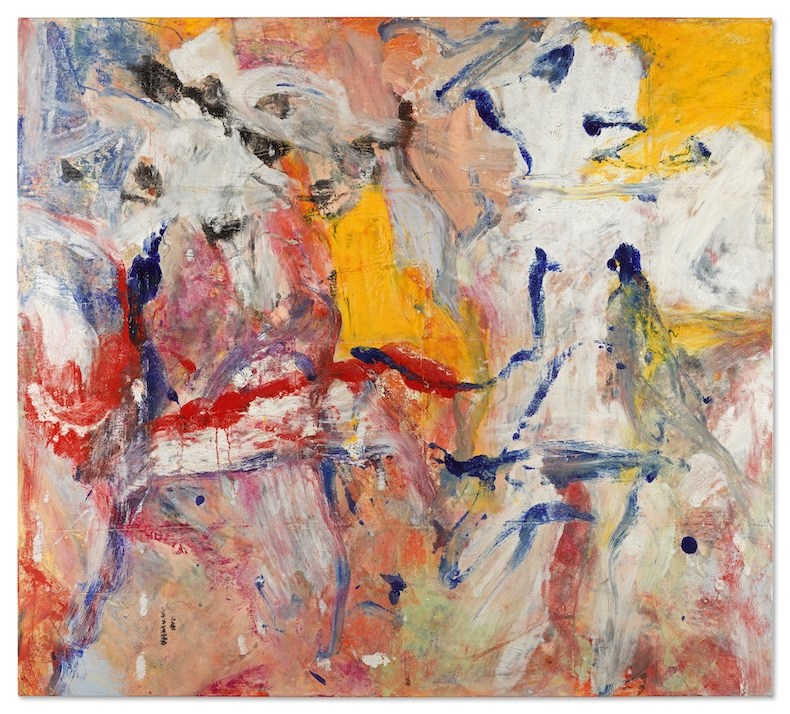
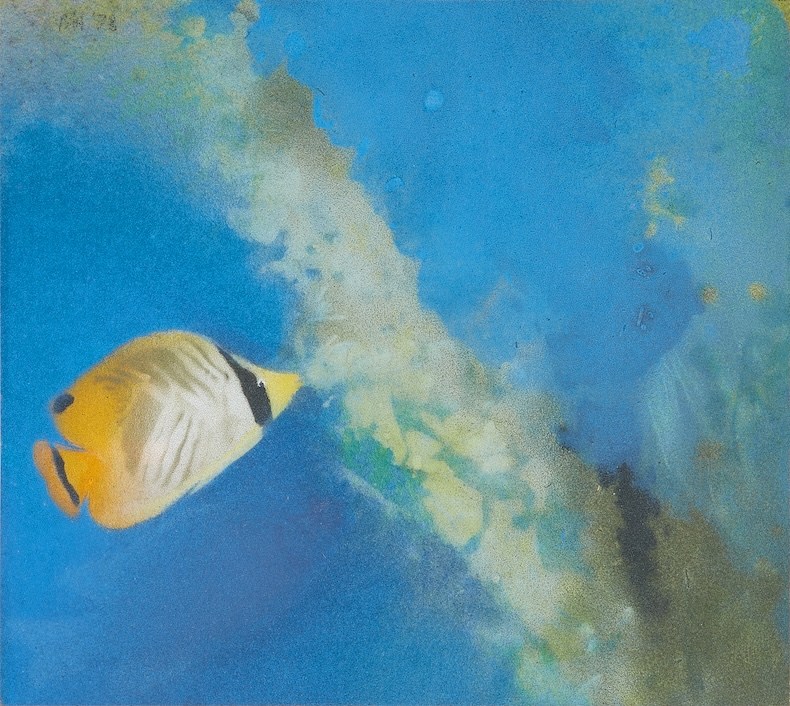
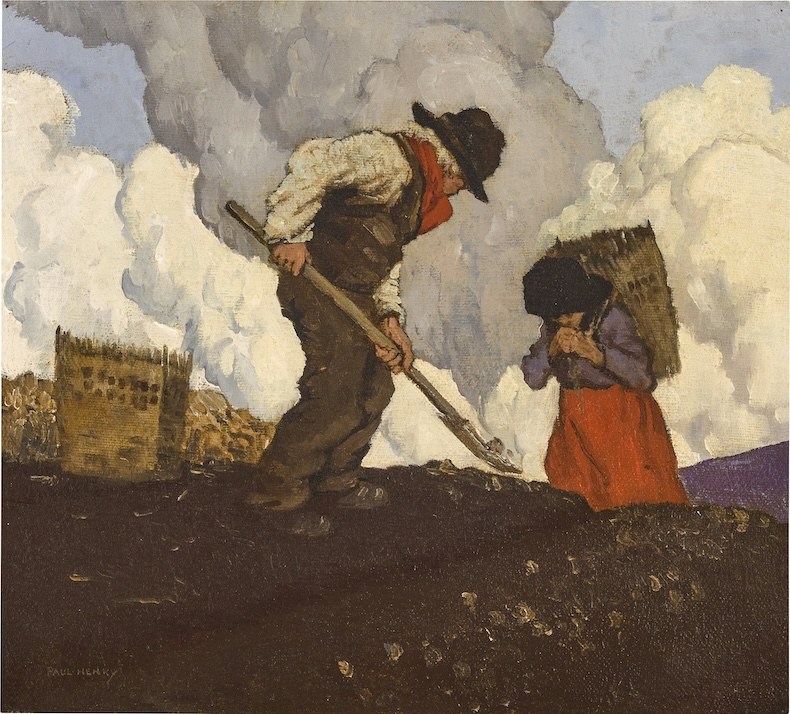
Sotheby’s evening contemporary sale was led by Willem de Kooning’s Untitled (1977), which sold for a mid-estimate £9.8m, the highest auction price for a de Kooning work in Europe. Another record was set by the British artist Michael Andrews’s Butterfly Fish, an acrylic on paper from 1978, which sold for an extraordinary £704,000, many times to £80,000 to £120,000 estimate. The Modern British and Irish art evening sale, meanwhile, made £8.5m on Wednesday night, with the Irish artist Paul Henry’s heavily symbolic Potato Harvest (1918–19) a surprise top lot, at £883,200, more than double the high estimate. It narrowly pipped the predicted top lot, Barbara Hepworth’s Shaft and Circle, which sold for £881,000 against expectations of £700,000 to £1m.
And finally, continuing the Modern British theme, Phillips announced yesterday that it has brokered the sale of a group of 22 works from the Dartington Hall Collection which have been jointly acquired for the nation by The Box, Plymouth, and the Royal Albert Memorial Museum & Art Gallery (RAMM), Exeter, entirely funded by a £815,035 grant from the Art Fund. The collection, acquired by Dorothy and Leonard Elmhirst, the philanthropic owners of Dartington, includes works by artists such as Ben and Winifred Nicholson, Lucie Rie and Christopher Wood, and the proceeds will go towards the preservation of the Dartington Hall Estate.
Three works from the collection were due to be included in Phillips’ evening sale last night, which was 100 per cent sold, totalling £14.8m. Records for young artists were, as usual at Phillips, the headline story, among them the London-based Megan Rooney, whose Blue departure (2021) made £245,000 (estimate £50,000 to £70,000). Perhaps a sign that there’s still life in the ‘wet paint’ market yet.