
Rakewell is sometimes bemused by the highly specific nature of certain Guinness World Records. There are, it seems, those who wake up one morning and set their mind to breaking the record for the most T-shirts removed while heading a football (22 T-shirts, by Abraham Muñoz); the greatest weight lifted by a person’s tongue (13kg, Thomas Blackthorne); or the fastest ever painting of a landmark statue – a record broken earlier this week by the artist David Garibaldi, who painted the head of the Statue of Liberty with impressive verisimilitude in 43.5 seconds.
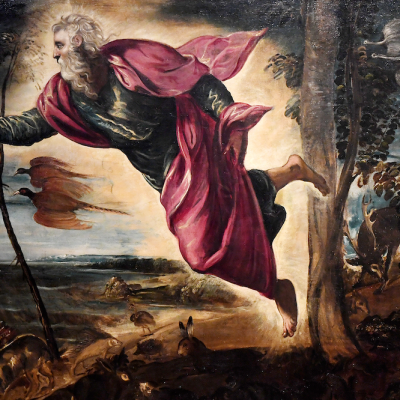
Speed isn’t everything, but your roving correspondent is always impressed when painters and draughtsmen bring not just finesse but also vitesse to their work. On a recent trip to Venice, Rakewell visited the Scuola Grande di San Rocco, established in the 15th century as the home of a confraternity that took its name from the plague saint. In May 1564 the governors of the Scuola invited Jacopo Tintoretto, Giuseppe Salviati, Paolo Veronese and Federico Zuccari to compete for the commission of painting the first-floor ceiling. According to Vasari, while the other painters were busy making sketches, Tintoretto, known in his lifetime as ‘Il Furioso’ for the speed and vigour of his brushwork, completed an entire painting – Saint Roch in Glory – and had it installed in the centre of the ceiling. The work on its own terms is impressive enough – ceiling paintings require a good deal more foreshortening and the elliptical shape would have needed careful composition not to seem crowded – but the fact that he executed it within a month of the competition is perhaps even more so. No wonder the patrons hired Tintoretto to decorate the rest of ceiling: some 20 paintings, which, naturally, he had completed by the autumn.
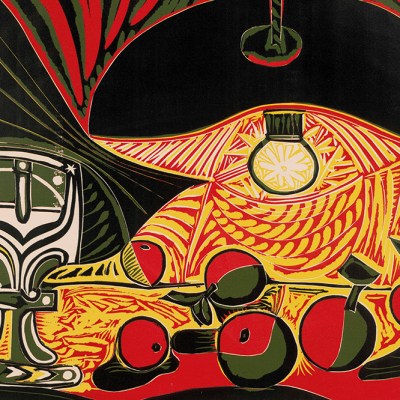
If you’re finding it difficult to imagine what painting at such speed might look like, the film-maker Henri-Georges Clouzot has you covered. With The Wages of Fear (1953) and Les diaboliques (1955), Clouzot established himself as the world’s greatest director of nail-biting thrillers – and what could be more gripping than watching a painter conjure art out of thin air? In Le mystère Picasso (1956) Clouzot has the septuagenarian cubist make 20 drawings, paintings and collages in 75 minutes. It is a delight to watch all manner of creatures take shape on paper that lets the ink bleed through, allowing the director to film the reverse of the sheet and capture the creativity in real time.
Although Clouzot’s film is available on streaming services, David Garibaldi’s feat of celerity is easier – and of course faster – to view online. Given that the painting itself took less than a minute, the insertion of jump cuts to speed things up seems unnecessary; Rakewell is relieved that the videographer was not around to film Picasso. Perhaps they would benefit from watching Víctor Erice’s Dream of Light (1992), which patiently charts an attempt by the realist artist Antonio López Garcia to paint a quince tree. For much of the film López is meticulous in his method, but several months into his project he picks up the pace, painting frantically as he tries to compete with the changing weather. Even the most painstaking of artists can succumb to the need for speed.