How to revolutionise an art fair

Elizabeth Dee, founder and CEO of Independent art fair. Photo (detail): Ralph Mecke
Elizabeth Dee, founder and CEO of Independent art fair. Photo (detail): Ralph Mecke
In mid May this year, New York felt even more like the centre of the art world than it has in recent years. The big auctions coinciding with heavy-hitting fairs Frieze, Independent and TEFAF reminded everyone that New York remains the city in which the biggest deals are done and the most valuable artworks are displayed. Yet amid the frenzy of sales was also the nagging question of whether this was the best that we can do. Is the parade of fair stalls and auction lots in a city already dense with galleries serving artists and collectors in the best way? It’s a question that Elizabeth Dee, founder and creative director of Independent, was asking long before the rest of us.
Dee was a gallerist for 17 years, representing artists from the 20th and 21st centuries. She began in the ’90s, the moment when the art world seemed intent on global domination and mass public recognition. ‘I was witnessing the international expansion of the art world and the franchising of art fairs, and I found that model quite uninspiring to my artists,’ she says. ‘I wasn’t the only person asking the question of why we are going to convention centres and showing one work by each artist in our programme, and trying to engage museums in what we do, as well as find new patrons for our artists.’ Rather than grumble about it, Dee worked out a way of changing the model. When she founded Independent in 2010 it launched at Dia Center for the Arts (now Dia Chelsea), ‘so we had a museum space from the beginning’. This took care of removing art fairs from boring convention centres and also meant that visitors had ‘an emotional memory, a psychological context to reset the framework’ of art fairs.
To begin with, Independent was focused on contemporary artists. The launch of a fair that focused on the 20th century came about because of a contraction, not an expansion, of the world: ‘it comes out of the pandemic,’ Dee says. But it was not so much an economic pressure as a philosophical one. She explains that it emerged from a ‘dialogue with the next generation of dealers such as Alma Luxembourg and others who were working exclusively in 20th-century modern [art] and were thinking about the relevance of the canon to a new generation [of collectors] that wasn’t necessarily European or American. It was something I was very deeply interested in.’ So Independent 20th Century was born, not just to offer a fair dedicated to the modern but also to ‘broaden and diversify the canon’. Together with a new intellectual underpinning for an art fair there was also a realisation that the expansiveness of this approach exposed undervalued works. ‘There was a tremendous market inflation in contemporary art during the pandemic,’ says Dee, ‘where living artists’ work was being traded at prices that were insane. And there were phenomenal works with fascinating scholarship attached to them that were available at a fraction of the price.’ Needless to say, this presented an opportunity for dealers and collectors both private and institutional.
When discussing the fifth edition of Independent 20th Century with Dee, these strands become quickly apparent. Dee is using this fair to map the art history of the 20th century with many routes that have been overlooked. This might seem highfalutin for an art fair, yet the more we talk and the more she shows me, the more realistic it starts to seem.
For Dee, much of the work that is required to bring hidden histories to the surface is done not by academics or the art market but by the conjunction of galleries and estates: ‘If there is an estate for an artist and that estate has to be represented by a gallery a miracle has already taken place.’ A miracle that relies on galleries doing ‘this incredibly difficult, challenging work of sourcing individual works as they do the research, and as they build a collection, and are able to bring things forward every five years or ten years for a small exhibition’. One of the results of this work is a group of ‘really interesting thinkers who happen to be in gallery practice, who are pursuing great modern masters of the 20th century and doing some emancipation work around certain artists’. These are the galleries that form the backbone of the fair.
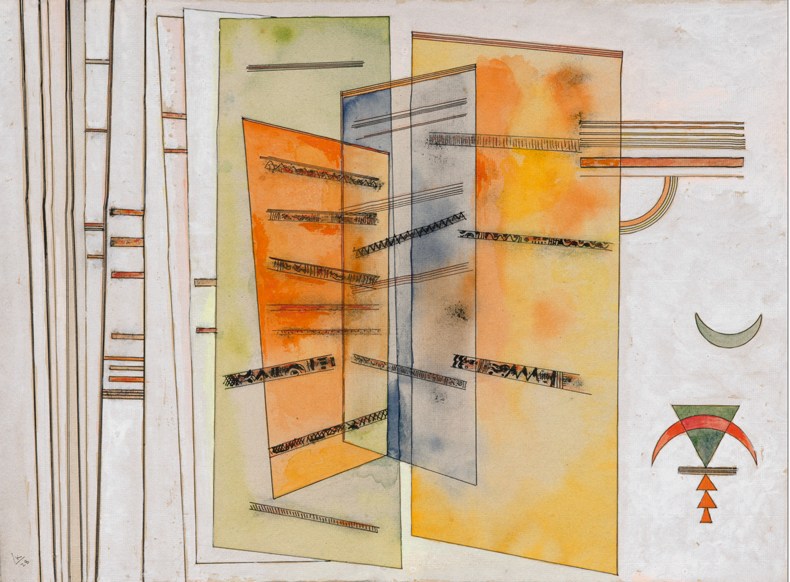
It is this work that allows Independent 20th Century to explore areas to which many in the art world pay mere lip service. When Independent takes over the Breuer building, the new headquarters for Sotheby’s as well as an icon of 20th-century architecture, visitors will have not only a tour of the obvious market darlings from the modern era such as Paul Klee and Andy Warhol but also, taking a cue from the building, a more considered look at the Bauhaus, where Marcel Breuer studied. This leads from Kandinsky – a teacher at the Bauhaus – to the Guggenheim Museum in its original guise from 1939 as the Museum of Non-Objective Painting. Hilla Rebay, the German aristocrat who became the first director of the museum, advised Solomon Guggenheim to collect Kandinsky’s work, resulting in him amassing a collection of more than 150 works by the artist. Kandinsky and Klee are at the heart of what Luxembourg + Co. will be presenting at Independent, but the story is fleshed out by Weinstein Gallery’s presentation, which displays works by Rebay and the other artists she championed, including Rudolf Bauer and Charles Green Shaw.
The trace of influence continues in David Nolan Gallery and Gió Marconi’s showing of work by Louise Nevelson, who was taught by Rebay. In 1937 Nevelson became one of the founding members of the American Abstract Artists group (AAA), which included Alice Trumbull Mason and Esphyr Slobodkina. As Dee tells me, Slobodkina ‘was the head of the AAA at one point in time, and she also was a very successful children’s book designer. A lot of these artists of the ’40s and ’50s had, like Warhol, a graphic commercial background.’
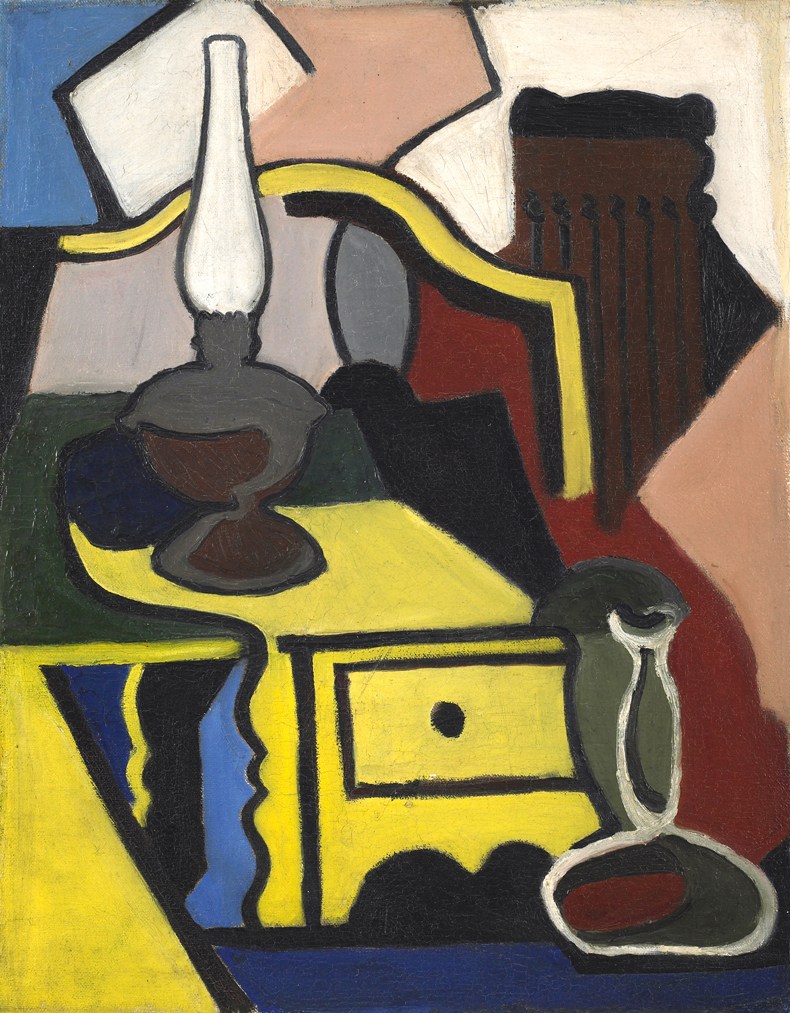
Dee’s expansiveness where the 20th century is concerned is not confined to the artists. ‘You have to think about the dealers at the time, too,’ she says. With regards to Mason, ‘we want to bring out her relationship with Dick Bellamy and the Green Gallery, which really gave her kind of conceptual art legitimacy.’ It’s because of these dealers that Mason reached a new audience in the 1960s and ’70s and, as Dee puts it, ‘got her due’. Though looking at Mason’s work it’s hard not to feel that perhaps she still hasn’t quite been given her due and that a fair like Independent is part of the process of achieving that.
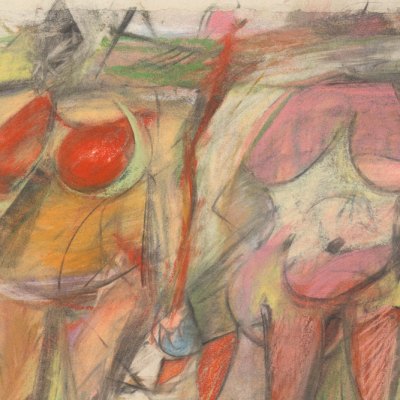
It is not an enormous leap to see how this connects with the women of Abstract Expressionism – Helen Frankenthaler and Elaine de Kooning will be making an appearance – and this is adumbrated by the history of the dealers too. Berry Campbell is showing a group of artists brought together as ‘the women of Stable Gallery’. The gallery, founded by the dealer Eleanor Ward, was one of the first to present Andy Warhol and Robert Indiana but it was also, as Dee says, ‘pushing forward a general notion of the quality of women’s voices’. Those women include Frankenthaler and de Kooning but also lesser-known figures such as Perle Fine.
It is unusual that a fair can organise itself around a mission to open up a century of art in a quasi-scholarly mode, yet this is exactly the mission that Dee has set herself. But then, as she says when I ask if the economic realities of running a fair might get in the way of presenting something like this, ‘I have no compromise. I am the person walking around an art fair the night before it opens, calling dealers, saying there’s five works on this wall, there only need to be four. Please take one down.’
Independent 20th Century takes place at the Breuer building, New York, from 24–27 September.