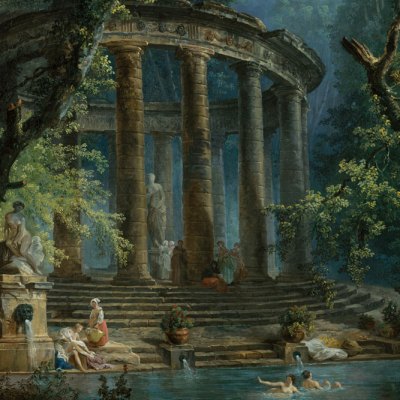
At a time when so many European landscapes are at risk from drought, fire and development, it is heartening to see one in the process of recovery. This is the case with Méréville, an 18th-century garden, 70 km south of Paris, that is regaining its historic form. In its day Méréville was on a par with the great landscape gardens of Stowe, Wörlitz or Pavlovsk but neglect in the 19th and 20th centuries almost destroyed it. For the past 25 years the department of Essonne has been restoring the garden in exemplary fashion. Now regularly open to the public, the 150-acre estate is one of the overlooked masterpieces of the Paris region.
The story of Méréville begins in 1785, when the financier Jean-Joseph, marquis de Laborde, began to transform what had been an unremarkable medieval chateau set in a secluded marshy valley in the Beauce region into a total work of art. Born in humble circumstances in the Pyrenees, Laborde made his fortune through bankrolling the French court, urban development in Paris, sugar plantations and slave trafficking. The estate was to be a monument to his success.
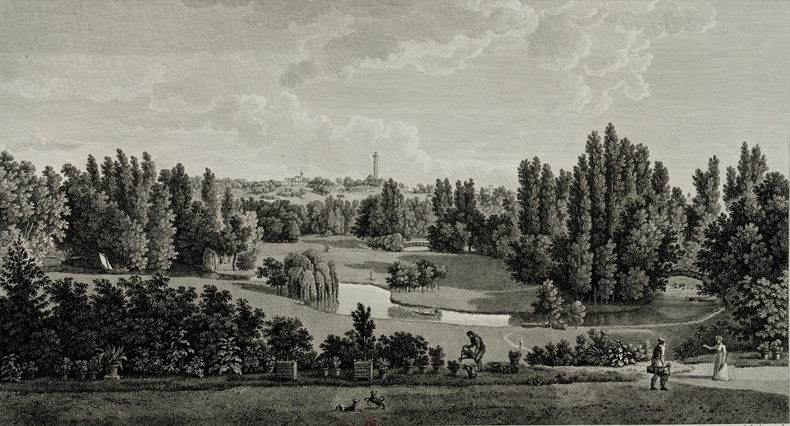
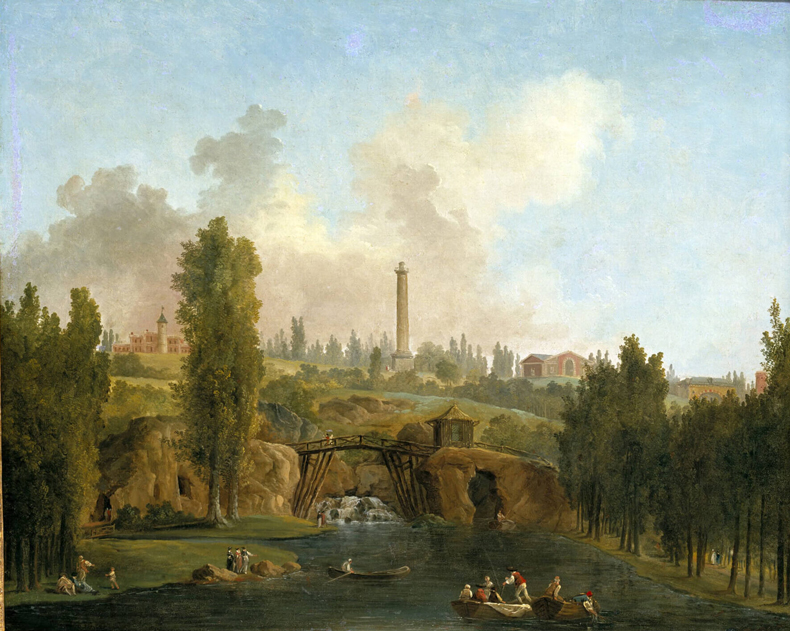
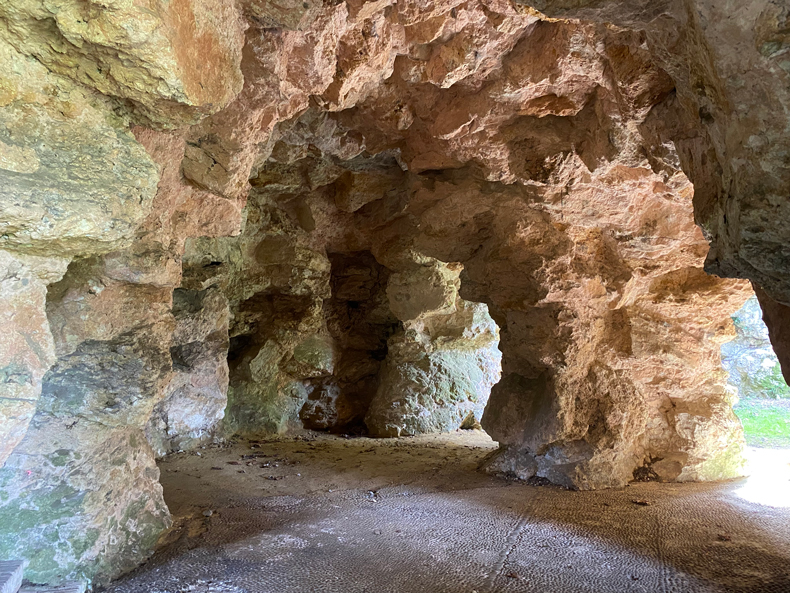
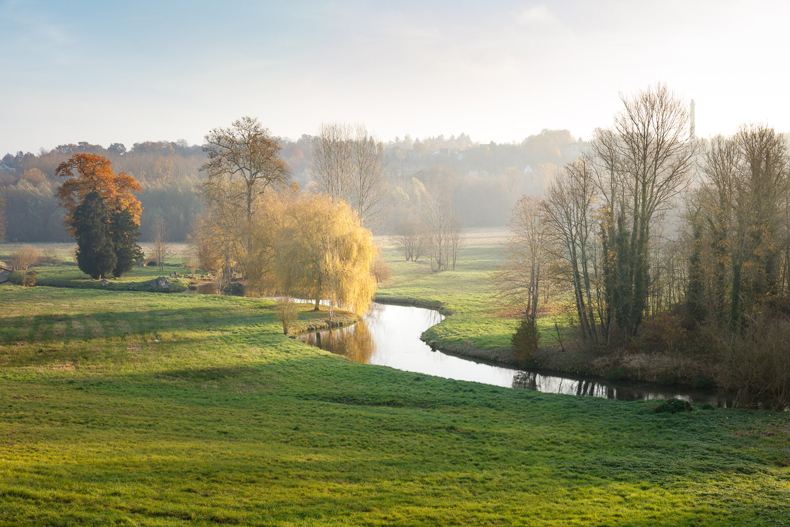
For the gardens Laborde hired the architect François-Joseph Bélanger, fresh from a tour of picturesque sites and landscape gardens in England. Bélanger’s composition focused on the river Juine, which bisects the estate. It was given a meandering form and dammed to create a vast lake. The slopes of the surrounding valley were enhanced by the creation of outcroppings, cascades and grottoes. When Bélanger fell out with Laborde over costs he was replaced by Hubert Robert, the fashionable Italian-trained painter of ruins, who imbued his predecessor’s extravagant vision with the grace of the Roman campagna.
The resulting landscape offered Laborde and his guests a Grand Tour in microcosm: the circuit passed through idyllic plains, a flowering orchard and ominous woods as well as perilous bridges and roiling cascades. The grounds were punctuated by antique-style memorials: a rostral column commemorating Laborde’s two drowned sons; a cenotaph in honour of Captain Cook; a copy of the temple of Vesta at Tivoli; and a dairy evoking the grotto of the nymph Egeria. The reality underlying these visions was less picturesque, financed as they were by Laborde’s investments in the slave trade and profits wrenched from the 1,400 Africans toiling on his Saint-Domingue sugar plantations. As Méréville neared completion, the Revolution caught up with the marquis. In April 1794 he was tried and executed, and buried in a common grave.
After Laborde’s family left Méréville in 1824 few subsequent owners could afford its upkeep. In the 1890s, when the landscape appeared to be on the verge of destruction, most of its architectural features were removed to the nearby estate of Jeurre, where they can still be visited today. After further decline in the post-war years, the department of Essonne purchased Méréville in 2000 but did not have the means to undertake a full restoration at once. Rather, Méréville was to benefit from a gradual programme of reinstatement. Other factors have also guided this approach since, during its years of neglect, the estate flourished as a habitat and is now a designated zone of ecological interest.
In the first decade of the restoration the poplar plantations installed by a former owner were removed and extensive archaeological surveys were conducted. Fortunately, the hydraulic network from the 1780s remained largely intact. To allow for public access, the original circuit of paths was reinstated. In 2021 a €3.8m restoration of the lake, the centrepiece of Bélanger’s design, began. Some 6,000 cubic metres of sediment (as well as unexploded wartime ordinance) had to be removed and, since March 2025, the lake has once again been the vast mirror we see in Robert’s canvases.
To celebrate this rebirth and complete the route through the gardens, the department commissioned the artist Jean-Michel Othoniel to create a bridge using his signature hand-blown glass orbs to evoke one of the estate’s lost structures. The next phase, the €4.4m restoration of the exterior of the chateau, is nearly complete.
Despite these successes, important questions remain: what use can be found for the chateau? How should Laborde’s links to slavery figure in this idyllic landscape? How should the lost structures and monuments be evoked for the visitor? Should they be reinstated with copies or evocations to restore the broader structure of the gardens? Or should there be interventions by contemporary artists?
Today, the appearance of the estate is far closer to the vision of Bélanger and Robert than it has been since the late 19th century. Yet it is much more than a preserved garden. To visit Méréville is to discover a deft balance of art and wildness, contrived picturesque visions and the beauty of spontaneous regeneration.
For more information about Méréville, visit Essonne Tourism. The park of Jeurre, home to Méréville’s monuments, is also open for guided visits.