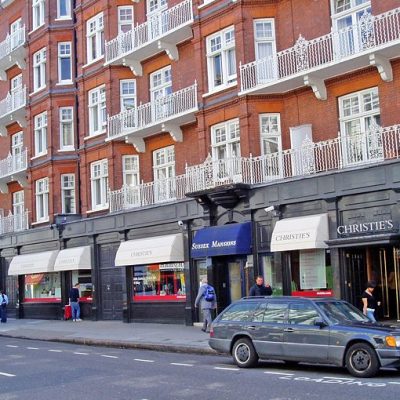
What goes around comes around. Christie’s has just announced that it has bought mid-market specialists and very British auction house Dreweatts. In 2007, Sotheby’s closed its west London saleroom, Sotheby’s Olympia. In 2017 Christie’s shuttered its South Kensington branch. Both of these closures seemed to confirm that the future for the largest auction houses lay with the top end of the market; the middle market was a thing of the past. The damage done to the specialist standing of Christie’s is well documented. Specialists in fields such as Japanese art, maps and historical fashion were axed. The idea of Christie’s as a home for expertise became harder to hold on to. Or at least it did if you were seeking expertise in anything other than a major auction category.
Of course, it should not be a surprise that an auction house should do anything other than pursue profit. The only reason for auction houses, as those of a sentimental bent would do well to remember, is to make money. And the closure of South Ken did make money via the sale of the property where it was housed. As Susan Moore wryly noted in this magazine at the time, Christie’s has form for selling property more successfully than art: she described the sale of its warehouse in Nine Elms in 2013 as probably Christie’s ‘best business deal in years’. It also brought some breathing space for the CEO, Steven P. Murphy, after the market had turned against him (by the end of 2016, art market sales were reportedly down by 11 per cent).
It is one of the more confusing aspects of auction life that big results do not equal big profits. Lots that are sold at the top of the market are frequently the subject of bidding wars between the duopoly of Christie’s and Sotheby’s, which means that they both compete to give away both the seller’s and buyer’s premiums to the consignor in order to win their business. The subject of profitability has become even murkier with the deals required to guarantee works. The result is that the sweet spot for auction houses is often in the mid-market works (around £1m–£5m), where such competition is rarer. The New York sales in November hinted that the auction market is still not back to full strength, so it makes sense to pursue the middle market and thus shore up profitable works used to ‘keep the lights on’ while one auction house battles it out for market share – in other words, the big-ticket items – with its rival.
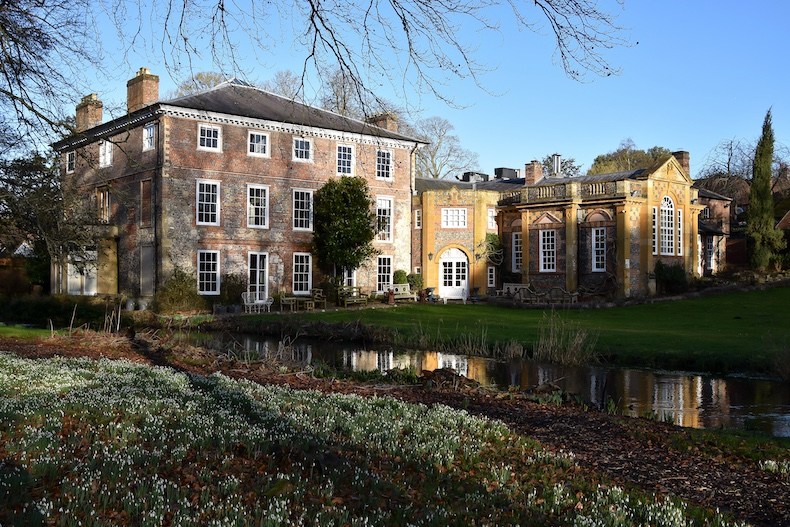
Bonnie Brennan, CEO of Christie’s, seems to be working overtime when she suggests that this is not a U-turn. ‘That decision was the right one,’ she told the Financial Times, ‘and made several years ago. It didn’t make sense to have two salerooms in London.’ When you see that Dreweatts’ success has been built on the single-owner collections that were the bread and butter of South Ken, that doesn’t seem completely likely. For example, it was only in June that Dreweatts sold the collection of former Christie’s auctioneer Patrick Lindsay and his wife, Amabel.
Many observers will see this as the old guard fighting back and will be pleased that contemporary is losing its sway at the auction house (interdepartmental rivalry being as true of auction houses as museums). As ever, that glee should be tempered by some realism. A lot of middle-market lots are about to come to the market through the Great Wealth Transfer. It could easily be too many for the market to support and then this might not look like such a smart move. At the moment, both Christie’s and Dreweatts are proclaiming their independence from one another with no job losses on the horizon. Let’s see how long that lasts. It’s not exactly as if Gooding & Company (bought by Christie’s in 2024) and Great Estates (bought in 1995) stayed independent. One is now known as Gooding Christie’s and the other became Christie’s International Real Estate (though it was sold to Compass in 2024).
There is one further important consideration. Details of the deal have not yet been released, but it is a truism that when companies are sold, the buyer always pays too much. A buyer who wants to buy something so much that speed is of the essence is normally a dream for auction houses, who can then max out the premiums to get the most profit for the least effort. It is not, however, a position an auction house itself should be in – and it is exactly the position that might make the moves Dreweatts has been making hard to execute. After all, Dreweatts made a profit of about £2m on a turnover of £12m for the year ending March 2026. That’s barely the budget of a single department at Christie’s.