In 1628 the Vasa set sail from Stockholm, covered 1,300 metres and sank. The Swedish flagship, built on the order of Gustavus Adolphus, was meant to be a turning point for a navy that had recently suffered a series of humiliations. She was decorated with commensurate grandeur. Sculptures and gilding adorned the boat; the king was depicted as a young man with long flowing hair being crowned by two griffins. When the ship toppled, it took with it the image of Gustavus Adolphus’s military might.
The boat stayed at the bottom of the sea until she was raised in 1961, in surprisingly good condition because of the alkalinity of the water. She now resides in a custom-built museum in Stockholm, an example of hubris and thwarted ambition or a testament to craftsmanship, to be read as you will.
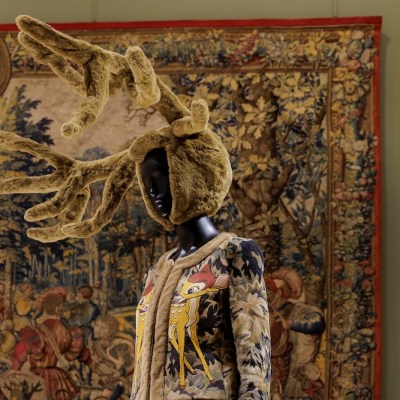
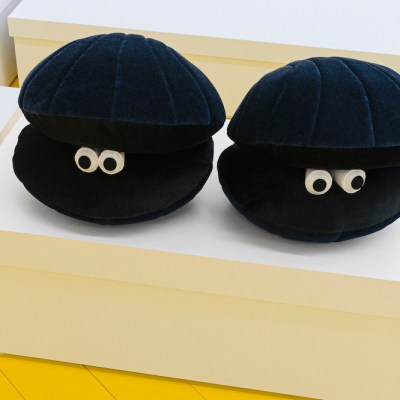
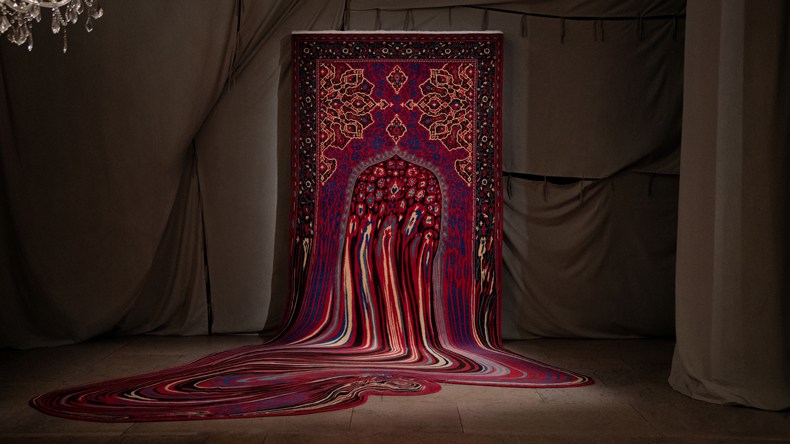
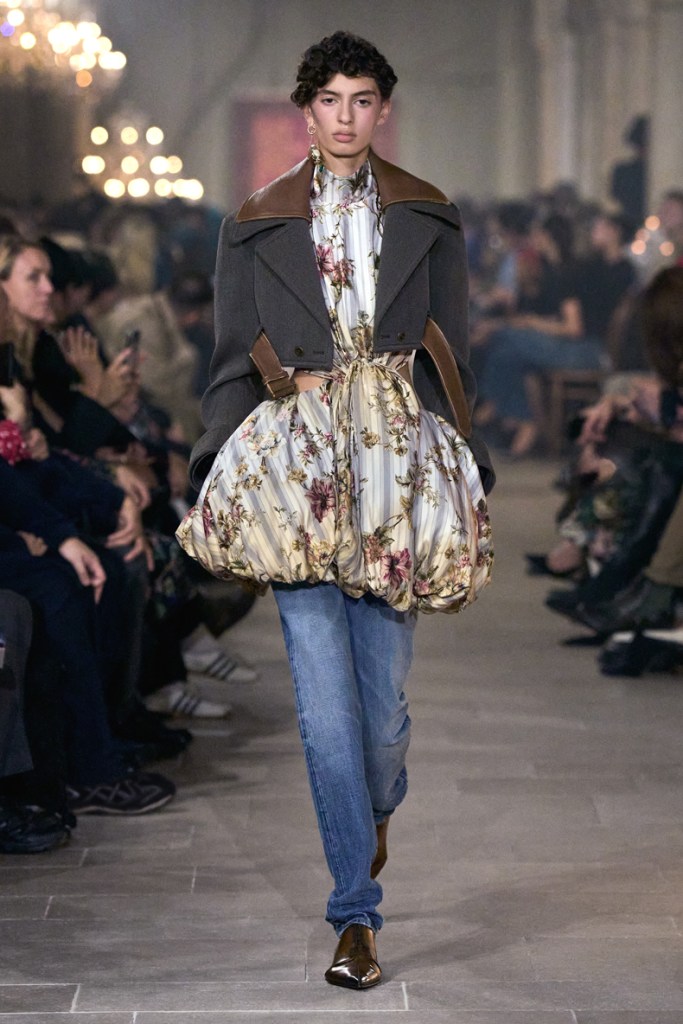
The shadow of the Vasa was evident in Paris this week in a more successful example of Swedish conquest: the Acne Studios fashion show, which celebrated the company’s 30th anniversary – no small feat for a Scandinavian brand operating in a territory dominated by French and Italian fashion armies. For his Spring/Summer 2027 show creative director Jonny Johansson turned to the baroque, inspired by the Vasa and other 17th-century influences. Acne Studios is famously a company built on denim, so floral silks and damasks on the runway may have come as something of a surprise. Yet in the context of this very specific slice of Swedish history it felt appropriate. Before the show proper began, members of the audience had a sinking feeling – prompted by the rugs of Faig Ahmed. The Azerbaijani artist had taken the traditional language of carpets and reimagined them to the point of dissolution. These familiar-seeming patterns were slowly reduced until the threads became pools of colour dripping down the rug, like a poured painting by Lynda Benglis. The ground of the work was not holding firm.
A similar dislocation occurred as models walked down the runway wearing jeans with voluminous baroque skirts and plum silk shoes with enormous buckles that looked as if they had stepped out of a portrait by Van Dyck. The effect was repeated by the models, who had hair down to their waists and looked as though the Cavalier court had come back to life. In an odd way, it was a more profound reading of the baroque and the ability of people of that period to entertain two visual ideas at the same time than many exhibitions have managed. At the heart of the baroque is a willingness to read decorative suggestion as both reality and artistry, so that to be in the painted hall of, say, the Old Royal Naval College in Greenwich is to be simultaneously in a great building of state and underwater. Watching this show was to be taken to an underwater world where nothing, not even the knots of a carpet, were secure.
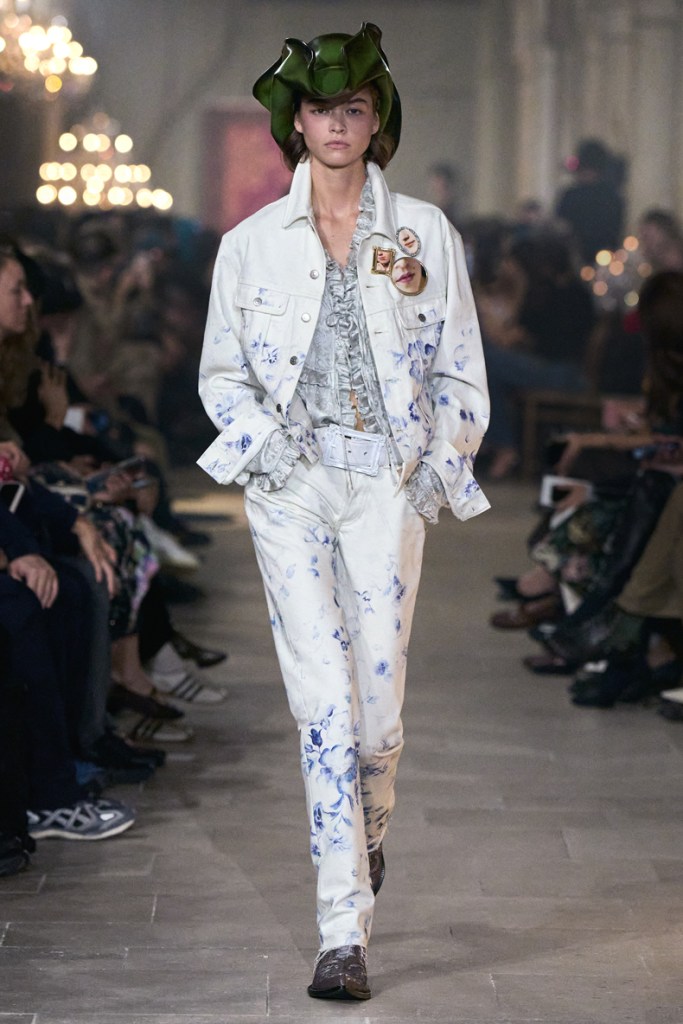
As if to show the freedom of this fantasy, the references were not from one period alone. When one model walked down the runway in a white denim jacket printed with flowers that looked fresh from a 17th-century silk and a hat that might originally have been a naval tricorn, it seemed more cowboy than boatswain, an impression emphasised by the pointed leather boots that no sailor would have worn.
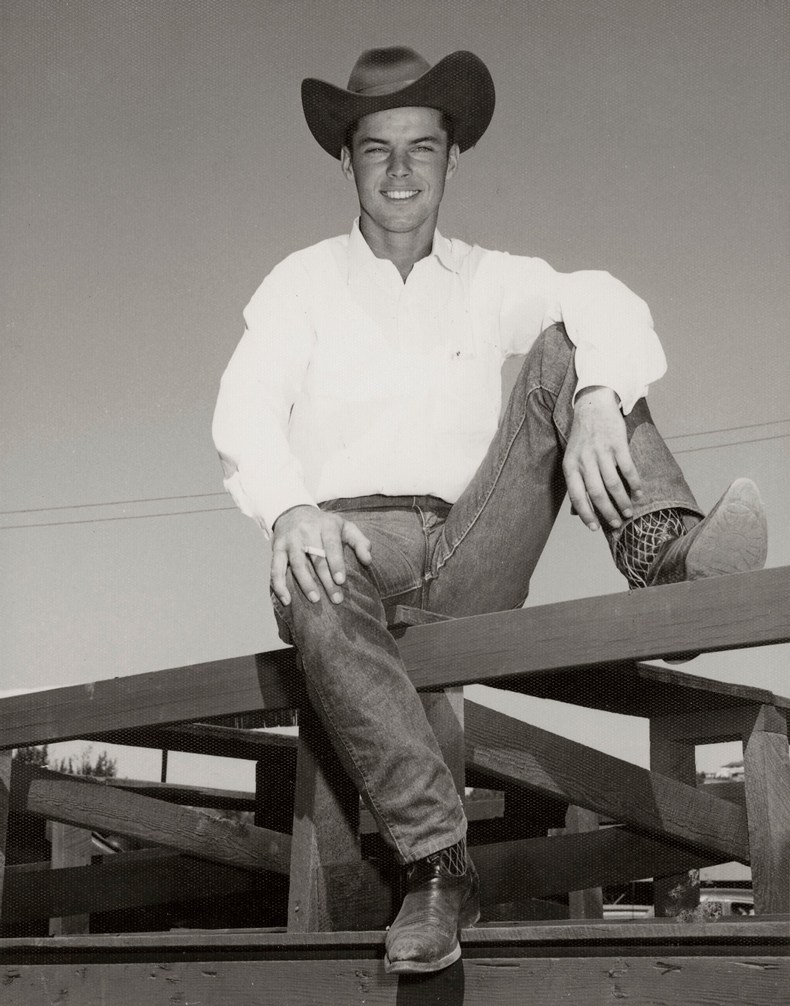
Perhaps inadvertently, this alluded to another Acne project. Acne Paper Palais Royal – the fashion house’s first permanent gallery space, in which shows are inspired by Acne Paper, the brand’s bi-annual cultural magazine – exhibited ‘Rodeo’, comprising photographs by Bruce Bellas, aka Bruce of Los Angeles.
These pictures of cowboys from the 1950s are lauded as establishing a new sort of ‘physique’ photography that influenced later photographers such as Robert Mapplethorpe and Herb Ritts. Yet to see only the form of these straight-presenting men is to miss the relaxed, wholesome air of these figures in their shirts and hats. Sure, there is a more obvious freedom when Bruce persuades them to remove their clothes and pose in all their natural beauty, but there’s more than one way to read a cowboy. And this collection of happy guys, hands on hips or tying a shoelace, hint at the man who is unfazed by having the full expanse of America to conquer. The clothes, the smiles, the haircuts are just as encoded with belonging as the trappings of the Cavalier court; the prospect of world domination is as innate. In this vision of the world, freedom and collapse seem mercilessly close to one another.
At Acne Studios’ fashion show the dripping carpet, slanting chandeliers and the ghost of a warship combined to evoke not so much an image of luxury as a painting made almost 200 years after the Vasa sank. The Sea of Ice (1823–24) by Caspar David Friedrich shows a ship sunk in the Arctic, overwhelmed by ice floes. Friedrich had never visited the Arctic. It was a fantasy based on written accounts and icebergs he had observed on the Elbe. At the time of his birth, his hometown, Greifswald, was part of Swedish Pomerania; he studied in Copenhagen. His version of Romanticism is tied tightly to a vision of Northern Europe. Yet, as with so much that he painted and like so many of the cultural currents that feed into the Acne show, his painting can be read in multiple ways. It might be about the power of nature but it could also be an allegory of failed statecraft, the good ship of state foundering in the sea, just as the Vasa became a metaphor for the pride of Gustavus Adolphus, who entered Sweden into the Thirty Years’ War and was killed in battle in 1632. That’s part of what makes the baroque such a rich seam for designers: one minute it’s all about the folds of a skirt, the next it reminds us of fragility of a different sort.
Paris Fashion Week for the Spring/Summer 2027 season runs until 6 October.