Städel Museum, Frankfurt
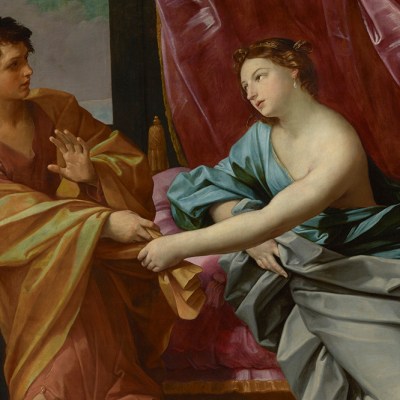
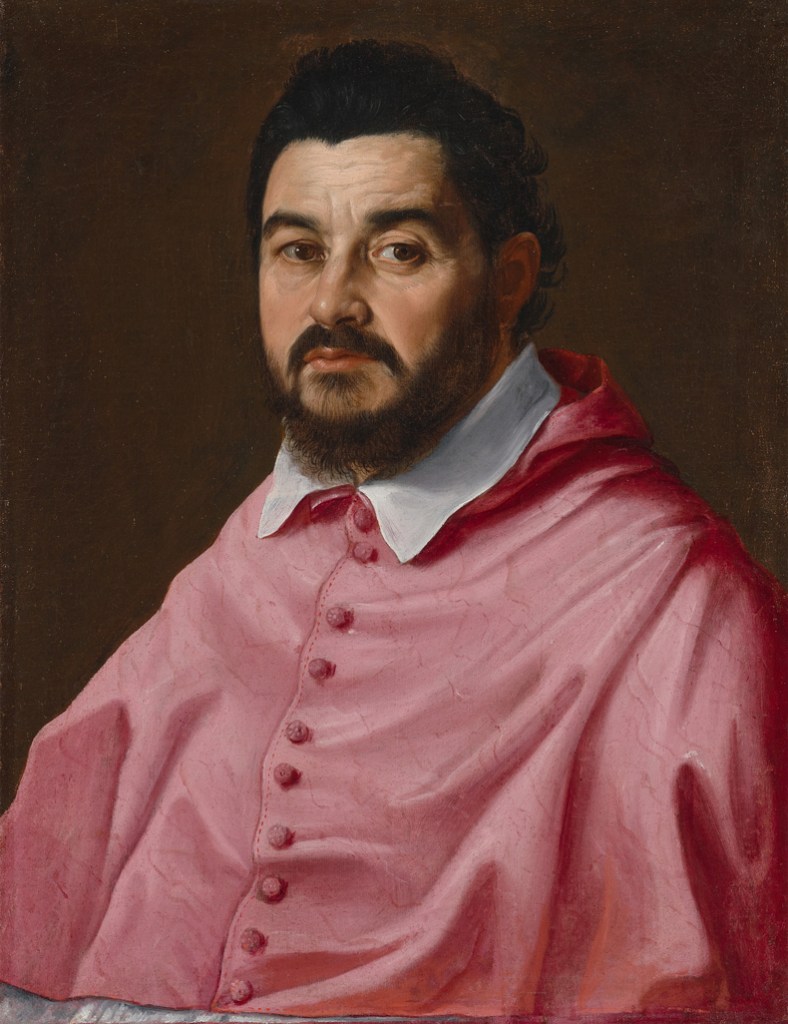
Portrait of Cardinal Giacomo Sannesi (1609), Guido Reni
Guido Reni was born and died in Bologna and is perhaps the most important exponent of the Bolognese school of painting, but during his time in Rome he painted this sumptuous portrait of Cardinal Giacomo Sannesi, a prominent collector and an early supporter of Caravaggio. The work has long been known about through a payment recorded in Reni’s account book from 1609 but was presumed lost until 2004, when it showed up at a Sotheby’s auction as a work from the Roman school of the first half of the 17th century. It was at this point that the art historian Erich Schleier attributed it to Reni and the work was bought by a private collector. It came to Christie’s in June this year and was acquired by the Städel for $355,600, more than double its upper estimate.
Tate
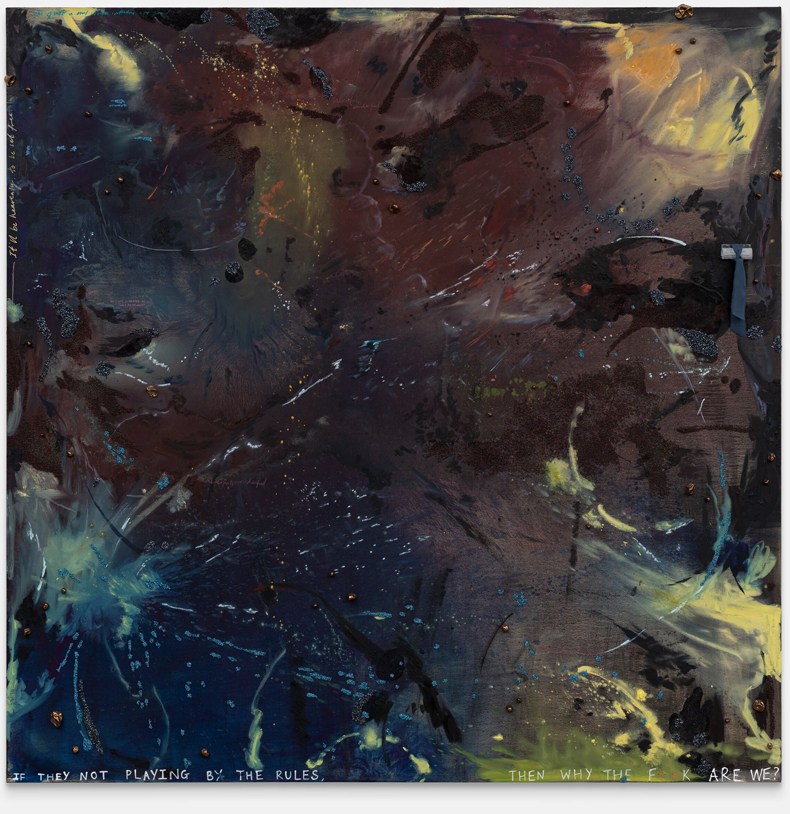
Peace Unknown (2026), Michaela Yearwood-Dan; Barge (1992), Luis Fernando Zapata; Charles Greig’s collection of Anglo-Indian art
Frieze London is fertile ground for the Tate: since its first edition in 2003, the institution has acquired more than 170 works from exhibitors there. Last month it snapped up two works of contemporary art: a painting by the young London-based painter Michaela Yearwood-Dan, a canvas of celestial black with pops of coloured oils, text, ribbons, glass beads and more, and a papier-mâché sculpture by the Colombian artist Luis Fernando Zapata made in 1992, two years before he died at the age of 42. In October the Tate also announced its acquisition of 50 works of art made in India during the 18th and 19th centuries, including paintings and prints by Indian artists and works such as Johann Zoffany’s majestic portrait of Prince Jawan Bakht. The works were donated by the collector and scholar Charles Greig, who was interviewed by Apollo for the November issue.
Strawberry Hill House, London
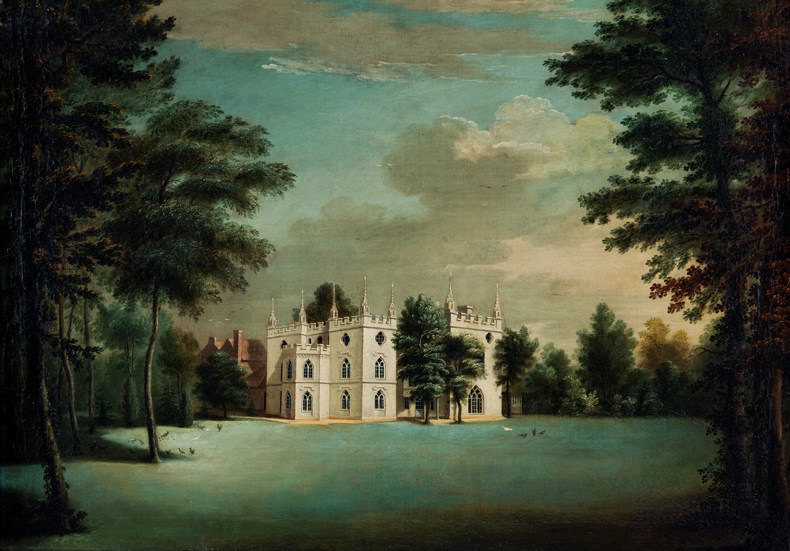
South East View of Strawberry Hill House (c. 1755–58), Johann Heinrich Müntz
At TEFAF in 2025, Thomas Coulborn & Sons exhibited a painting by the Swiss 18th-century painter and architect Johann Heinrich Müntz of Strawberry Hill House, the white gothic palace built by Horace Walpole in the mid 18th century. The work was commissioned by Walpole while Müntz was living and working at Strawberry Hill and is a rare surviving depiction of the house as it was in its early days, before the construction of the main cloister, tower and several other additions. Much of Walpole’s prestigious collection was dispersed in the Great Sale of 1842 but a key aim of the Strawberry Hill Trust is to buy back as much of that original collection as possible, this being a prime example. Thomas Coulborn & Sons offered it to the trust at a reduced price at TEFAF last year and, after a successful fundraising campaign to make up the £85,000 needed, the painting is now once again owned by Strawberry Hill.
Spanish Gallery, Bishop Auckland
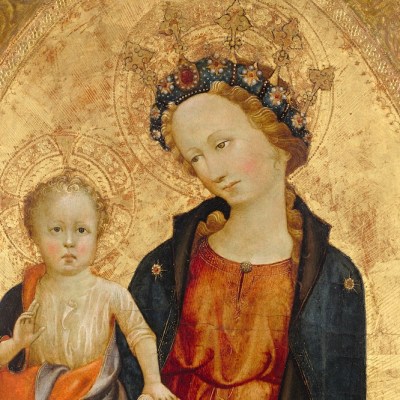
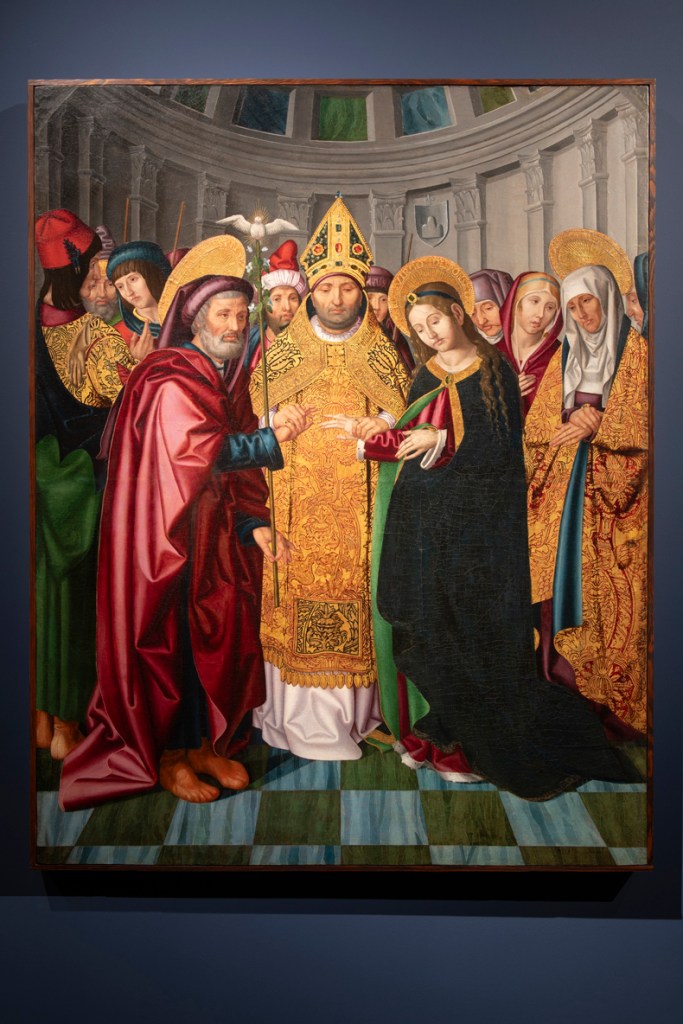
The Marriage of the Virgin (1492), Paolo da San Leocadio
The exhibition ‘In the Italian Manner’, which took place at the Prado in Madrid earlier this year, teased out the under-appreciated links between Iberia and Italy in the 14th and early 15th centuries, whereby Italian artists would travel to Spain and vice versa, receiving commissions and spreading artistic styles and trends. The works in the Prado show ran up to 1410 but had it had a longer sweep, it would surely have included Paolo da San Leocadio, who was born in Reggio Emilia in 1447 and travelled to Valencia in 1472 under the patronage of Cardinal Rodrigo Borja (who would go on to become Pope Alexander VI). In 1492 he painted an altarpiece for the Church of Santa María de Castellón, a panel from which has recently been rediscovered and has just been acquired by the Spanish Gallery in Bishop Auckland, County Durham – the only museum in the UK dedicated to Spanish Old Masters. The Prado acquired another part of the same altarpiece in 2023.
The Box, Plymouth/Royal Albert Memorial Museum & Art Gallery, Exeter
22 works of modern British art from the Dartington Hall Collection
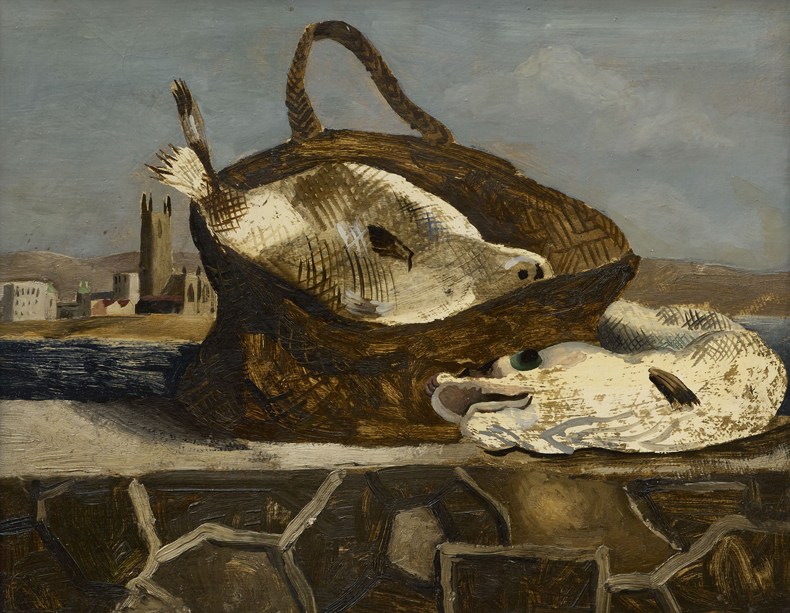
Dartington Hall, near Totnes in Devon, has a long and colourful history: originating in the 14th century, it was owned by the Dukes of Exeter for centuries, was described by Pevsner as ‘one of the most spectacular surviving domestic buildings’ from the medieval period, and then fell into disrepair, until it was bought by Leonard and Dorothy Elmhirst in 1925, who reconstructed the site with the help of Rabindranath Tagore. The site is now the home of the Dartington Hall Trust, which runs summer schools and other educational programmes, as well as managing the art collection, which mostly comprises modern British art, a portion of which was recently put up for sale. Two museums in the south-west of England – the Box in Plymouth and the Royal Albert Memorial Museum & Art Gallery in Exeter – stepped in to jointly acquire the works, with the help of an £815,000 grant from the Art Fund. The selection of 22 artworks includes depictions of Dartington and its surroundings by the likes of John Piper and Cecil Collins; ceramics by Bernard Leach and Lucie Rie; and a portrait of Christopher Wood by Jean Cocteau.
Crystal Bridges Museum of American Art, Bentonville
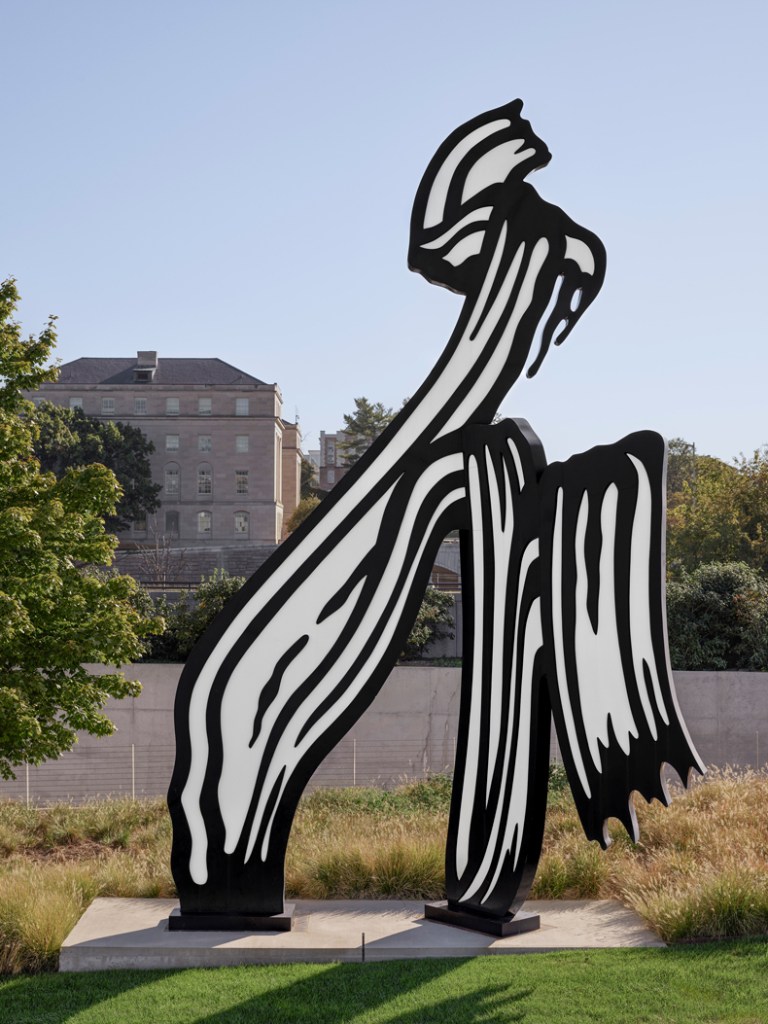
Brushstroke (1996), Roy Lichtenstein
In the wake of reopening to the public after its expansion, the Crystal Bridges Museum has announced the acquisition of a sculpture by Roy Lichtenstein. Brushstroke (1996; enlarged and fabricated 2002–03) is a large three-dimensional representation of one of the Pop artist’s signature cartoonish paint strokes, bought from the Hirshhorn in Washington, D.C. It will be placed outside in the grounds of the museum and is a companion piece of sorts to Screen with Brushstrokes (1986), a folding wooden screen on which are painted several similar types of brushstrokes, which the collectors Candace and Michael Humphreys donated to the museum last year.